
As I sipped a bowl of Coconut Lime Fish Soup, the bright notes of lime danced on my tongue, transporting me to sunny beaches and swaying palm trees. This creamy delight combines rich coconut milk with the zesty freshness of lime juice, creating a vibrant dish that’s perfect for any season. What I love most about this Coconut Lime Fish Soup is how effortlessly quick it is to prepare and how it serves as a hearty, healthy meal filled with essential nutrients like omega-3 fatty acids. It’s a blissful escape from the mundane and a comforting hug on a chilly day. Curious to see how you can whip up this tropical favorite right in your kitchen? Let’s dive in!
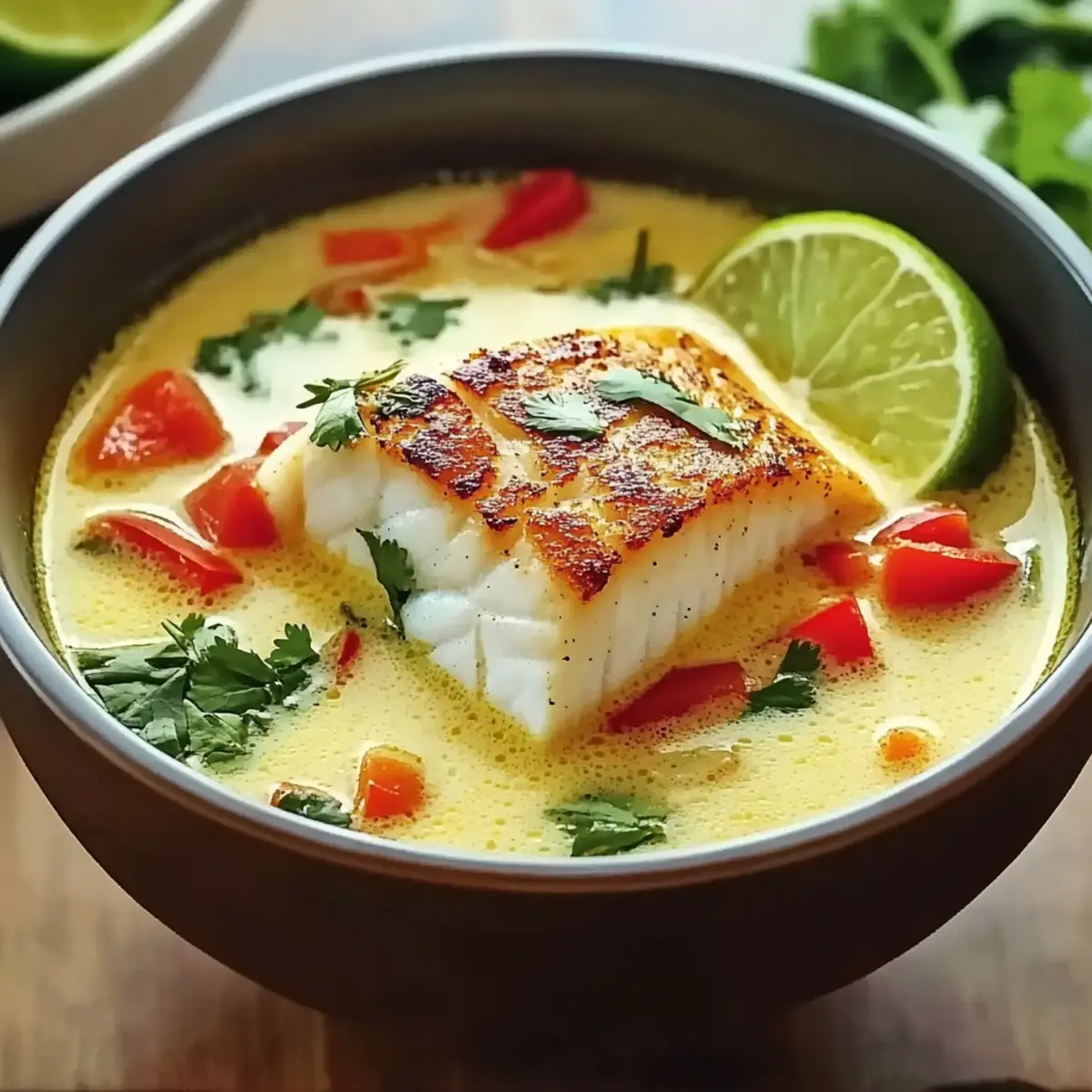
Why Is Coconut Lime Fish Soup So Special?
Vibrant, Tropical Flavor: The zesty lime and creamy coconut combine for an invigorating experience that brightens up any dinner table.
Healthy Comfort: Packed with omega-3s and vitamins, this soup is both nourishing and satisfying, perfect for those looking to enjoy a guilt-free meal.
Quick and Easy: Ready in just 30 minutes, it’s a fantastic option for busy weeknights, saving you time while still impressing family and friends.
Versatile Ingredients: With options to substitute fish or customize veggies, it’s a flexible recipe that caters to everyone’s taste. For another delightful coconut-inspired dish, check out my Grilled Thai Coconut chicken skewers!
Crowd-Pleaser: This soup is sure to win over even the pickiest eaters, making it an ideal choice for dinner parties or gatherings!
Coconut Lime Fish Soup Ingredients
For the Soup
- White fish fillets – Lean protein that maintains the soup’s heartiness; substitute with salmon or shrimp for variety.
- Olive oil – Used for sautéing aromatics; can be replaced with coconut oil for a tropical twist.
- Onion – Adds a sweet base flavor; substitute with shallots for a milder taste.
- Garlic – Enhances flavor; fresh cloves are preferred, but garlic powder can be used in a pinch.
- Ginger – Provides warmth and spice; ground ginger can be a substitute if fresh is unavailable.
- Red bell pepper – Adds color and sweetness; green bell pepper or diced carrots can be used as alternatives.
- Coconut milk – Brings creaminess; for a lighter texture, use light coconut milk or alternate with almond milk.
- Fish or chicken broth – Provides the liquid base and depth; vegetable broth can be used for vegetarian options.
- Lime juice – Essential for brightness and flavor; fresh limes are best; bottled lime juice works as a substitute.
- Fish sauce – Adds umami; replace with soy sauce or tamari for a vegetarian option.
- Sugar – Balances acidity; a splash of honey can be a natural substitute.
- Salt and pepper – For seasoning according to taste.
- Fresh cilantro – Adds freshness and depth; parsley can be used as a substitute.
- Lime wedges – For garnishing; use lemon wedges or omit if desired.
Getting these ingredients prepped means you’re one step closer to tasting the vibrant, soothing magic of Coconut Lime Fish Soup—a true family favorite!
Step‑by‑Step Instructions for Coconut Lime Fish Soup
Step 1: Sauté the Aromatics
In a large pot, heat 2 tablespoons of olive oil over medium heat. Add one chopped onion and sauté for about 5 minutes, or until the onion turns translucent and aromatic. This step forms a sweet base for your Coconut Lime Fish Soup, so keep stirring occasionally to prevent any burning.
Step 2: Enhance the Flavor
Once the onions are translucent, add 3 minced garlic cloves and 1 tablespoon of grated ginger to the pot. Cook for an additional minute, allowing the garlic and ginger to release their fragrant oils. You’ll know they are ready when the kitchen fills with their delightful aroma, setting the stage for your vibrant soup.
Step 3: Add Color and Sweetness
Stir in one sliced red bell pepper, cooking for about 3-4 minutes until it softens slightly. This colorful addition not only enhances the visual appeal of your Coconut Lime Fish Soup but also infuses it with natural sweetness. Stir frequently to ensure even cooking and prevent sticking.
Step 4: Build the Soup Base
Pour in one can of coconut milk and 2 cups of fish (or chicken) broth, stirring everything together well. Bring this mixture to a gentle simmer over medium heat. You’ll see tiny bubbles forming around the edges of the pot—the signal that your flavorful base is coming to life.
Step 5: Brighten the Flavor
Once simmering, add the juice of 2 limes, 1 tablespoon of fish sauce, and 1 teaspoon of sugar to the pot. Stir thoroughly and taste to adjust seasoning with salt and pepper as desired. The combination of lime, fish sauce, and sugar will create a beautifully balanced flavor profile for your Coconut Lime Fish Soup.
Step 6: Incorporate the Fish
Carefully add your choice of white fish fillets into the pot, ensuring they’re submerged in the broth. Simmer gently for 5-7 minutes, or until the fish is opaque and flakes easily with a fork. This step allows the fish to absorb all the delicious flavors, resulting in a comforting soup.
Step 7: Finish with Freshness
Remove the pot from heat and stir in a handful of freshly chopped cilantro. This final touch adds a burst of freshness and color to your Coconut Lime Fish Soup. Allow the soup to sit for a couple of minutes for the flavors to meld perfectly before serving.
Step 8: Serve and Enjoy
Ladle your Coconut Lime Fish Soup into bowls, garnishing with lime wedges for an extra zesty kick. Pair with jasmine rice or crusty bread to soak up the delicious broth, and enjoy the comforting warmth of this vibrant dish straight from your kitchen!
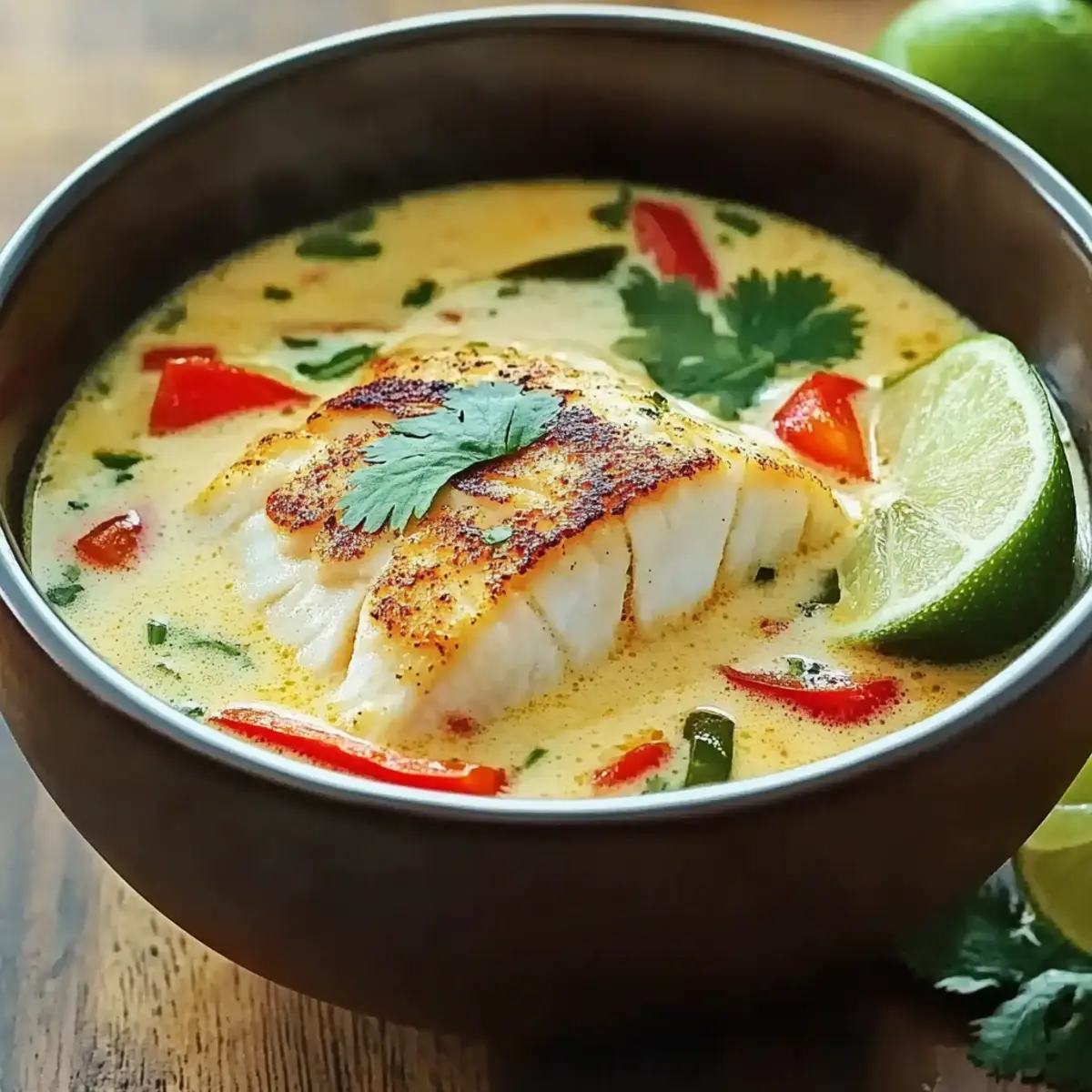
Expert Tips for Coconut Lime Fish Soup
-
Fresh Fish Matters: Use the freshest fish possible for optimal flavor and texture. Thaw frozen fish properly to ensure even cooking.
-
Add a Kick: For a little heat, toss in Thai chili peppers or red curry paste while cooking. It elevates the Coconut Lime Fish Soup experience!
-
Adjust Consistency: If you prefer a thicker soup, reduce the broth by simmering longer. Don’t rush this step; it enhances the flavors too.
-
Vegetarian Twist: Substitute the fish with tofu or hearty mushrooms along with vegetable broth to create a delightful vegetarian version without losing flavor.
-
Mix it Up: Feel free to experiment with different vegetables, such as snap peas or carrots, for added nutrition and texture in your Coconut Lime Fish Soup.
How to Store and Freeze Coconut Lime Fish Soup
Fridge: Store leftover Coconut Lime Fish Soup in an airtight container for up to 3 days. Make sure to let it cool completely before refrigerating.
Freezer: For longer storage, freeze the soup in a freezer-safe container for up to 3 months. Leave some space at the top for expansion, and label the container for easy identification.
Reheating: To reheat, thaw in the refrigerator overnight, then warm gently on the stovetop over low heat, stirring occasionally to prevent the fish from overcooking.
Serving Tip: Freshly garnish with cilantro and lime wedges after reheating to brighten flavors and enhance presentation!
What to Serve with Coconut Lime Fish Soup
Elevate your dining experience with delightful sides that perfectly complement the vibrant flavors of this tropical soup.
-
Jasmine Rice: Steamed jasmine rice adds a subtle floral aroma, perfect for soaking up the flavorful broth and balancing the soup’s creamy texture. A must-have for a complete meal!
-
Crusty Bread: Freshly baked baguette or sourdough provides a satisfying crunch and is ideal for dipping. The bread’s earthy notes harmonize beautifully with the bright lime.
-
Fresh Green Salad: Crisp mixed greens tossed with a light vinaigrette brings a refreshing contrast of textures and flavors, elevating the whole meal experience. Toss in slices of avocado for added richness!
-
Mango Salsa: This fruity, zesty topping introduces a delightful sweetness that plays off the tangy lime in the soup, creating an exciting flavor pairing. Serve it on the side or as a garnish for added flair.
-
Coconut Rice: Infusing rice with coconut milk provides a creamy, aromatic side that mirrors the soup’s flavors and creates a cohesive dining experience.
-
Chilled White Wine: A glass of chilled Sauvignon Blanc or a light Riesling enhances the meal’s refreshing notes, offering a perfect pairing for this tropical delight.
-
Key Lime Pie: For dessert, finish your meal with a slice of key lime pie, echoing the bright citrus notes of the soup and leaving everyone with a satisfied smile.
Make Ahead Options
These Coconut Lime Fish Soup ingredients are excellent for meal prep! You can chop your veggies, sauté the aromatics, and even prepare the base soup up to 24 hours in advance, refrigerating the soup components separately to maintain their freshness and texture. When you’re ready to enjoy this delightful soup, simply reheat the soup base on the stove until warm, then add in the fish, and let simmer for 5-7 minutes until cooked through. This method not only saves you time during busy weeknights but also ensures that your Coconut Lime Fish Soup is just as delicious and vibrant when it’s time to serve. Enjoy this comforting dish with minimal effort!
Variations & Substitutions for Coconut Lime Fish Soup
Explore the delightful ways you can make this Coconut Lime Fish Soup your own, adding your personal flair!
-
Vegetarian Twist: Replace white fish with tofu or sturdy mushrooms for a delicious vegetarian version. This swap keeps the soup hearty while adding a unique earthy element.
-
Seafood Medley: For a seafood lover’s dream, mix in shrimp or scallops alongside the fish for added texture and flavor. This enriching combination make each bite truly special.
-
Heat It Up: Add red chili flakes or a splash of Sriracha for a spicy kick that enhances the soup’s tropical essence. Just a little heat can transform your dish into an unforgettable experience!
-
Nutty Flavor: Swap traditional broth for coconut broth to deepen the creamy finish of your soup. Its rich essence pairs beautifully with the lime, creating a luxurious bowl of goodness.
-
Veggie Boost: Toss in some fresh snap peas, zucchini, or baby corn for a nutritional boost and added crunch. These vibrant additions create more color and flavor, turning this soup into a veggie extravaganza!
-
Citrus Options: Experiment with other citrus juices like lemon or orange for a slightly different zing. Each option brings its own unique brightness, complementing the coconut beautifully.
-
Lighten It Up: For a lighter version, use light coconut milk or a splash of almond milk instead of full-fat coconut milk. You’ll still enjoy the creaminess with fewer calories.
-
Flavor Enhancer: For an umami-rich flavor, try low-sodium soy sauce instead of fish sauce. This swap makes it suitable for vegetarians while still providing depth.
Each of these variations can cater to your taste buds and dietary preferences, making the Coconut Lime Fish Soup an enjoyable experience for everyone. If you’d like to continue exploring coconut-inspired dishes, don’t miss out on my Baked Cod in Coconut Lemon Cream for another delightful treat.
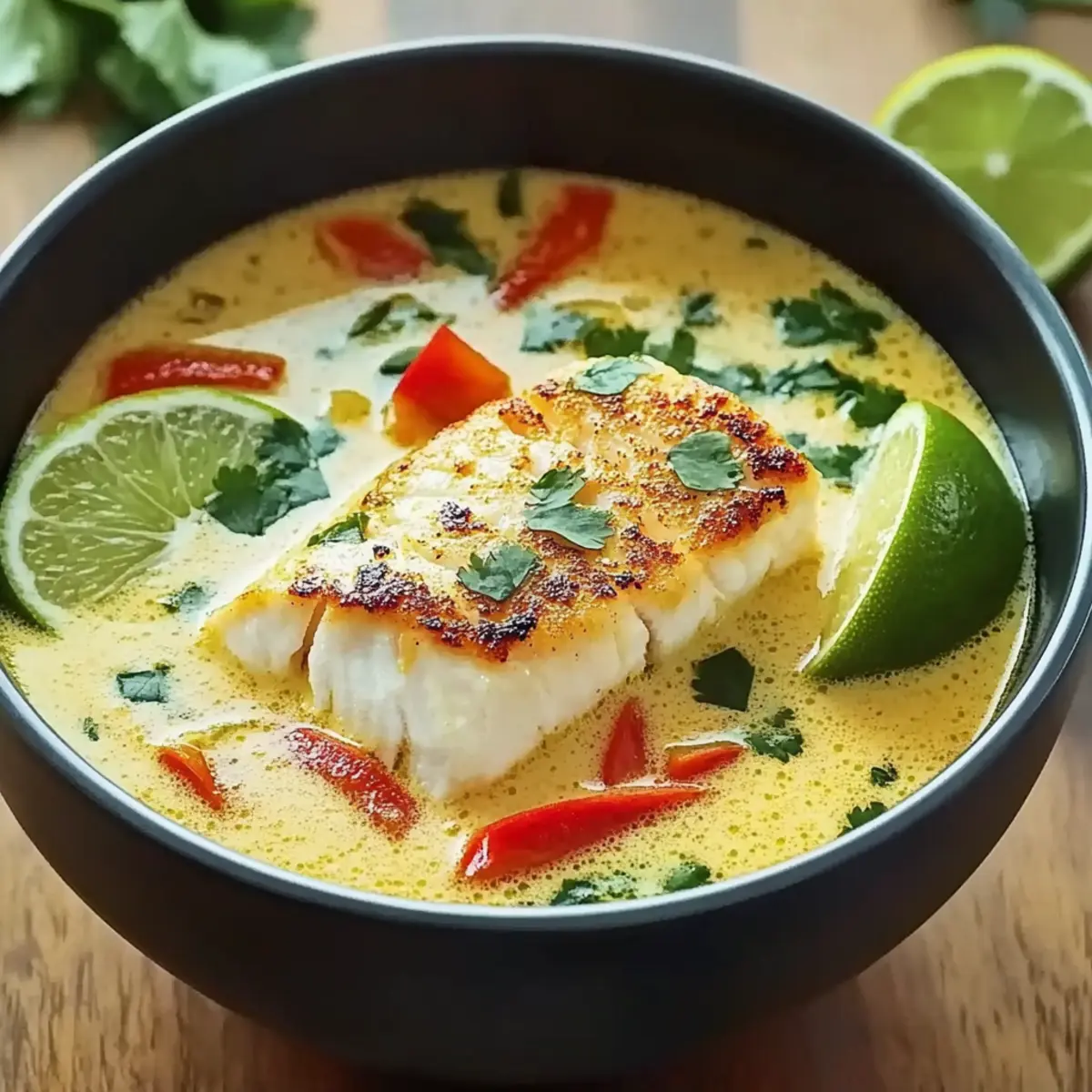
Coconut Lime Fish Soup Recipe FAQs
How do I choose the best fish for my Coconut Lime Fish Soup?
Absolutely! Selecting fresh fish is key to the flavor of your soup. Look for fish fillets that are firm to the touch and have a mild ocean scent. Avoid any fish with dark spots or a sour smell, as these are signs of spoilage. If you’re opting for frozen fish, ensure it’s fully thawed before cooking to maintain texture and flavor.
What is the best way to store leftover Coconut Lime Fish Soup?
Very! To keep your Coconut Lime Fish Soup fresh, store it in an airtight container in the fridge for up to 3 days. Allow the soup to cool completely before sealing it. If you need to keep it longer, it can be frozen for up to 3 months. Just make sure to leave a little space in the container for expansion, and label it for future reference.
Can I freeze Coconut Lime Fish Soup?
Absolutely! To freeze your Coconut Lime Fish Soup, pour it into a freezer-safe container after it has cooled. Ensure you leave a little space at the top for expansion, and seal the container tightly. When you’re ready to enjoy it, thaw it in the refrigerator overnight. Reheat gently on the stovetop, stirring occasionally to prevent the fish from overcooking.
What should I do if my Coconut Lime Fish Soup is too thin?
No problem! If your soup is thinner than you’d like, you can thicken it by simmering it a bit longer. This extra time allows the soup to reduce and intensify the flavors. You could also mash a portion of the vegetables inside the soup or add a slurry made from cornstarch and water to achieve the desired consistency.
Is Coconut Lime Fish Soup gluten-free?
Yes! This Coconut Lime Fish Soup is naturally gluten-free as long as you use gluten-free fish sauce or soy sauce alternatives like tamari. Be sure to check the labels, and you can enjoy this delicious dish without worry!
Can I modify this recipe for dietary restrictions?
Very! If you need to cater to specific dietary restrictions, consider substituting the fish with tofu or hearty mushrooms for a vegetarian twist. You can also use vegetable broth instead of fish or chicken broth. Feel free to mix in additional vegetables or adjust ingredients based on what you have available—cooking is all about creativity!
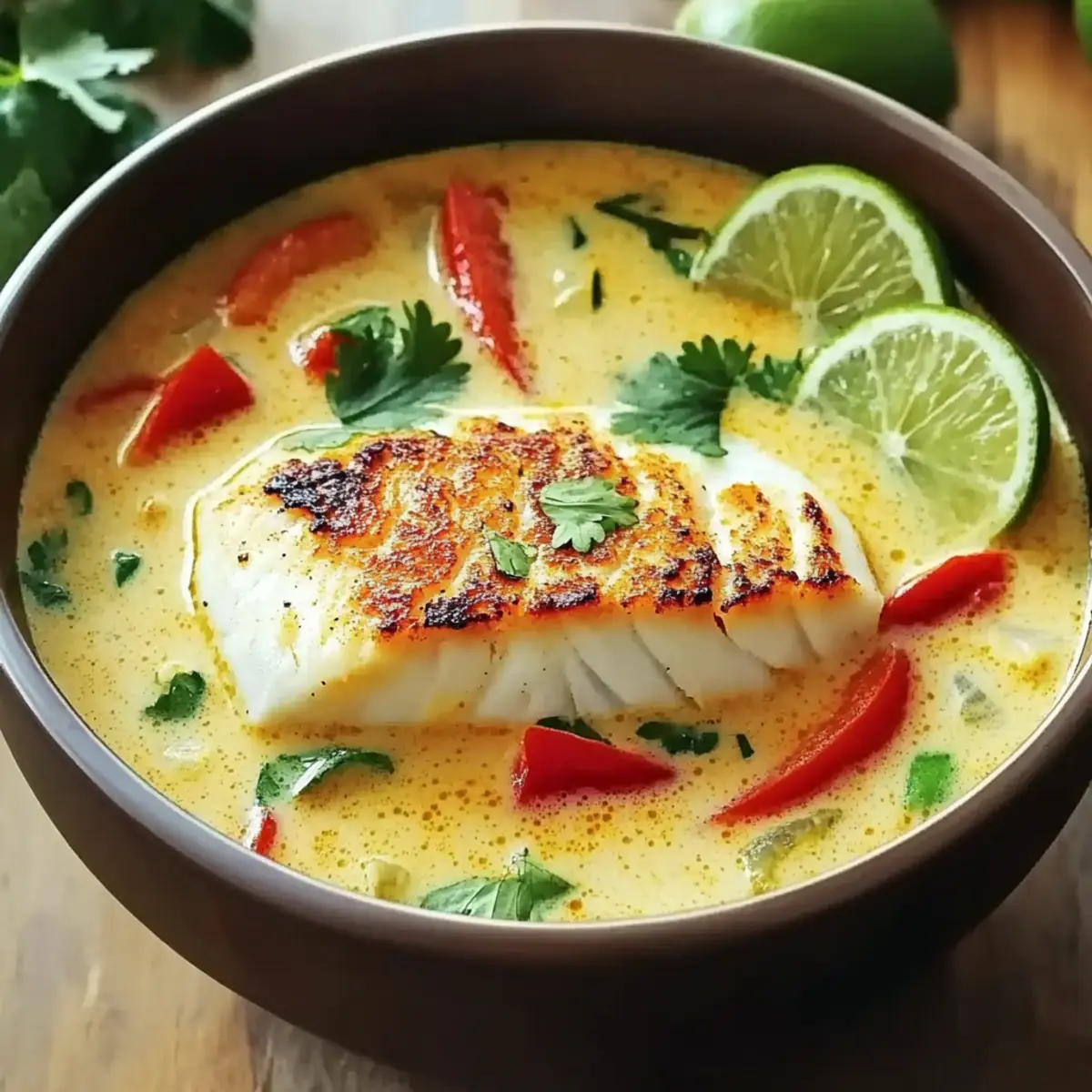
Delicious Coconut Lime Fish Soup: A Tropical Escape at Home
Ingredients
Equipment
Method
- In a large pot, heat 2 tablespoons of olive oil over medium heat. Add one chopped onion and sauté for about 5 minutes, or until the onion turns translucent and aromatic.
- Once the onions are translucent, add 3 minced garlic cloves and 1 tablespoon of grated ginger to the pot. Cook for an additional minute.
- Stir in one sliced red bell pepper, cooking for about 3-4 minutes until it softens slightly.
- Pour in one can of coconut milk and 2 cups of fish (or chicken) broth, stirring everything together well.
- Once simmering, add the juice of 2 limes, 1 tablespoon of fish sauce, and 1 teaspoon of sugar to the pot.
- Carefully add your choice of white fish fillets into the pot, ensuring they're submerged in the broth. Simmer gently for 5-7 minutes.
- Remove the pot from heat and stir in a handful of freshly chopped cilantro.
- Ladle your Coconut Lime Fish Soup into bowls, garnishing with lime wedges.
Leave a Reply