
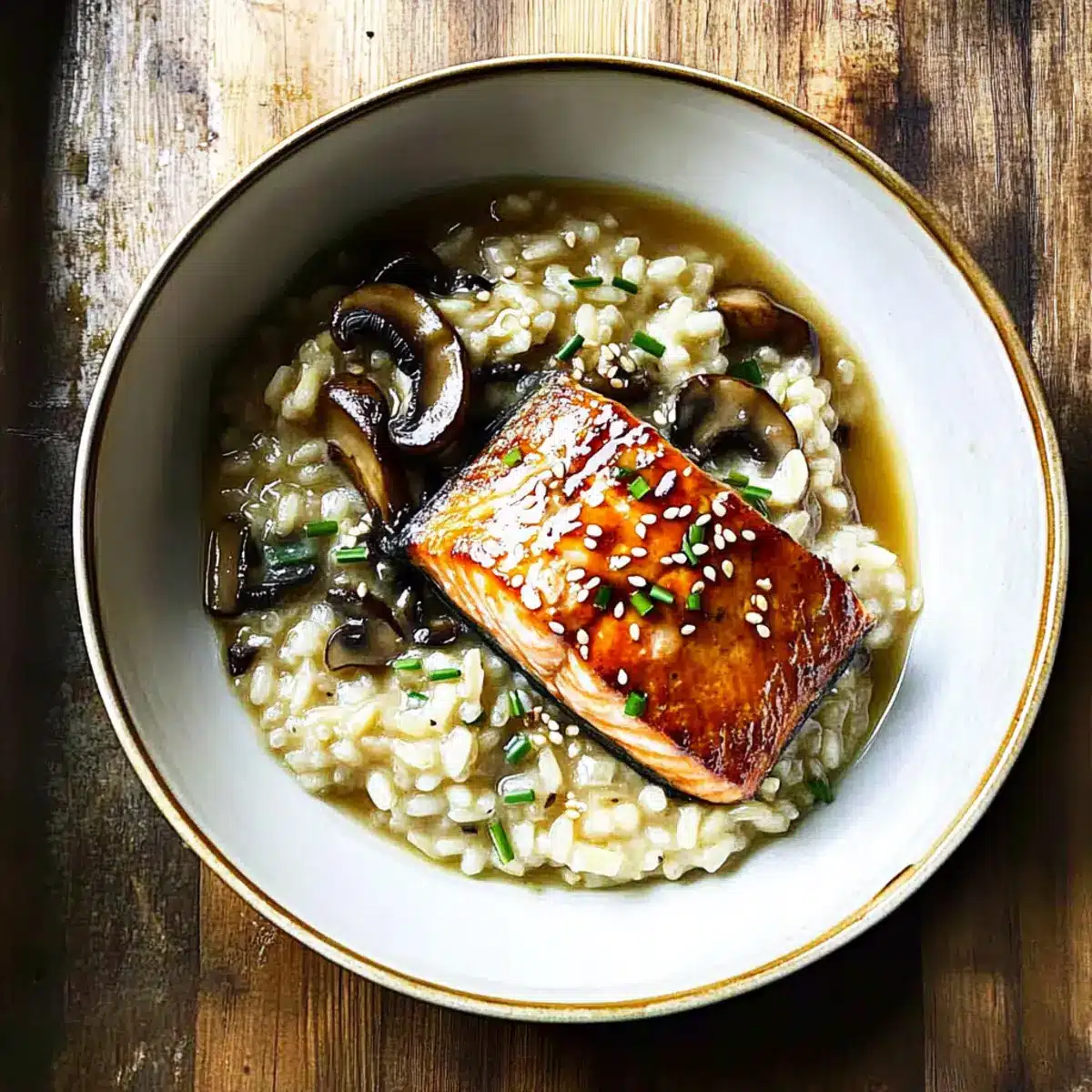
As I plated my creation, the delightful aroma of miso and simmering broth filled the kitchen, instantly making it feel like home. This Japanese Style Risotto with Seared Salmon is more than just a quick dinner; it’s a comforting embrace on a busy weeknight. The combination of tender, soy-glazed salmon resting atop creamy, umami-rich risotto infused with shiitake mushrooms promises to transport your taste buds to a cozy izakaya. In just 40 minutes, you can whip up a dish that’s not only satisfying but also adaptable, with gluten-free options available. Whether you’re treating loved ones or simply indulging in a wholesome meal for one, this risotto offers both comfort and flair. What twists will you add to make it your own?
Why is This Risotto a Must-Try?
Irresistible Umami Depth: The infusion of miso and shiitake mushrooms creates a harmonious flavor that’s rich and satisfying.
Healthy Comfort Food: This dish embraces the essence of comfort while offering a nutritious profile, making it perfect for any dinner table.
Quick and Easy: Ready in just 40 minutes, you’ll have a gourmet-like meal with minimal fuss—ideal for busy weeknights!
Versatile for All: Whether you’re a seasoned chef or a kitchen newbie, this recipe allows for easy swaps, like using tamari for a gluten-free option. Try pairing it with a refreshing side salad for a complete meal, similar to my Smoked Salmon Crostini for extra flair!
Crowd-Pleasing Appeal: This risotto is guaranteed to impress guests, serving as a delightful centerpiece for gatherings that’ll have them coming back for seconds!
Japanese Style Risotto Ingredients
For the Risotto
- Olive Oil – Adds richness and prevents sticking; use vegetable oil if preferred.
- Shiitake Mushrooms – Provide earthy flavor and texture; substitute with cremini or button mushrooms if needed.
- Low Sodium Soy Sauce – Adds saltiness and depth; for a gluten-free option, use tamari.
- Yellow Onion – Creates a sweet base flavor; white or red onions work in a pinch.
- Celery – Contributes crunch and freshness; can be replaced with fennel for a different flavor.
- Garlic Clove – Enhances flavor complexity; garlic powder can substitute in many situations, though fresh is best.
- Rice (Sushi Rice or Arborio) – Provides creaminess and texture; always use short-grain rice for optimal results.
- Dry White Wine or Sake – Adds acidity and depth of flavor; replace with an extra ¼ cup chicken broth if avoiding alcohol.
- Hot Chicken Broth – Essential for cooking the risotto and imparting flavor; use vegetable broth for a vegetarian option.
- White Miso Paste – Adds umami and richness; tahini can be a substitute for a similar texture, but the flavor will vary.
- Black Pepper – For seasoning; freshly cracked adds the best flavor.
For the Salmon
- Salmon Fillets – Provides flaky texture and richness; any fresh piece of salmon will work wonderfully.
- Brown Sugar – Balances the savory notes of the soy sauce when glazing the salmon.
For Garnishing
- Chives and Sesame Seeds – Enhances flavor and presentation; scallions can be substituted for chives if desired.
This Japanese Style Risotto with Seared Salmon not only embodies heartwarming comfort but also invites creativity with its flexibility. Enjoy making it your own!
Step‑by‑Step Instructions for Japanese Style Risotto with Seared Salmon
Step 1: Marinate the Salmon
In a shallow dish, combine low sodium soy sauce, white wine, and brown sugar to create a marinade. Place the salmon fillets in the mixture, ensuring they are well coated. Let them marinate for at least 15 minutes at room temperature while you prepare the other ingredients, enhancing the flavor of the salmon.
Step 2: Prepare the Vegetables
While the salmon marinates, clean and cut your vegetables. Tear the shiitake mushrooms into bite-sized pieces, finely dice the celery, mince the garlic clove, and chop the yellow onion. This prep takes about 5 minutes, and having all ingredients ready will make the cooking process smoother for the creamy risotto.
Step 3: Cook the Mushrooms
In a heavy skillet, heat 1 tablespoon of olive oil over medium heat. Add the prepared shiitake mushrooms and sauté for approximately 5-6 minutes until their moisture has evaporated and they begin to brown. Stir in a splash of soy sauce and cook for 1 more minute, then transfer the mushrooms to a plate, allowing them to cool slightly.
Step 4: Make the Risotto Base
Lower the heat and add another tablespoon of olive oil to the same skillet. Sauté the chopped onion, diced celery, and minced garlic for about 2 minutes until they are softened and fragrant, then add in 1 cup of sushi rice. Toast the rice for 1 minute, stirring frequently to ensure an even coating of oil and flavor.
Step 5: Deglaze and Cook the Risotto
Pour in the white wine, stirring to deglaze the pan, and let it simmer for 2 minutes until the alcohol has evaporated. Gradually add hot chicken broth, one ladle at a time, stirring continuously. This process should take about 15 minutes until the rice is almost al dente, ensuring you maintain a creamy texture as you incorporate the broth into the Japanese Style Risotto.
Step 6: Incorporate Miso and Mushrooms
Once the rice is nearly cooked, mix in the sautéed shiitake mushrooms and 2 tablespoons of white miso paste dissolved in a small amount of hot broth. Stir well until the miso is fully incorporated and the risotto becomes creamy, cooking for an additional 2-3 minutes. Taste and season with black pepper to enhance the umami flavors.
Step 7: Sear the Salmon
Using the same skillet, heat a mixture of oil and butter over medium-high heat until shimmering. Carefully add the marinated salmon fillets, cooking for about 4 minutes on each side until they are golden brown and flake easily with a fork, indicating they are cooked through. Remove the salmon from the skillet and set aside to rest briefly.
Step 8: Serve the Dish
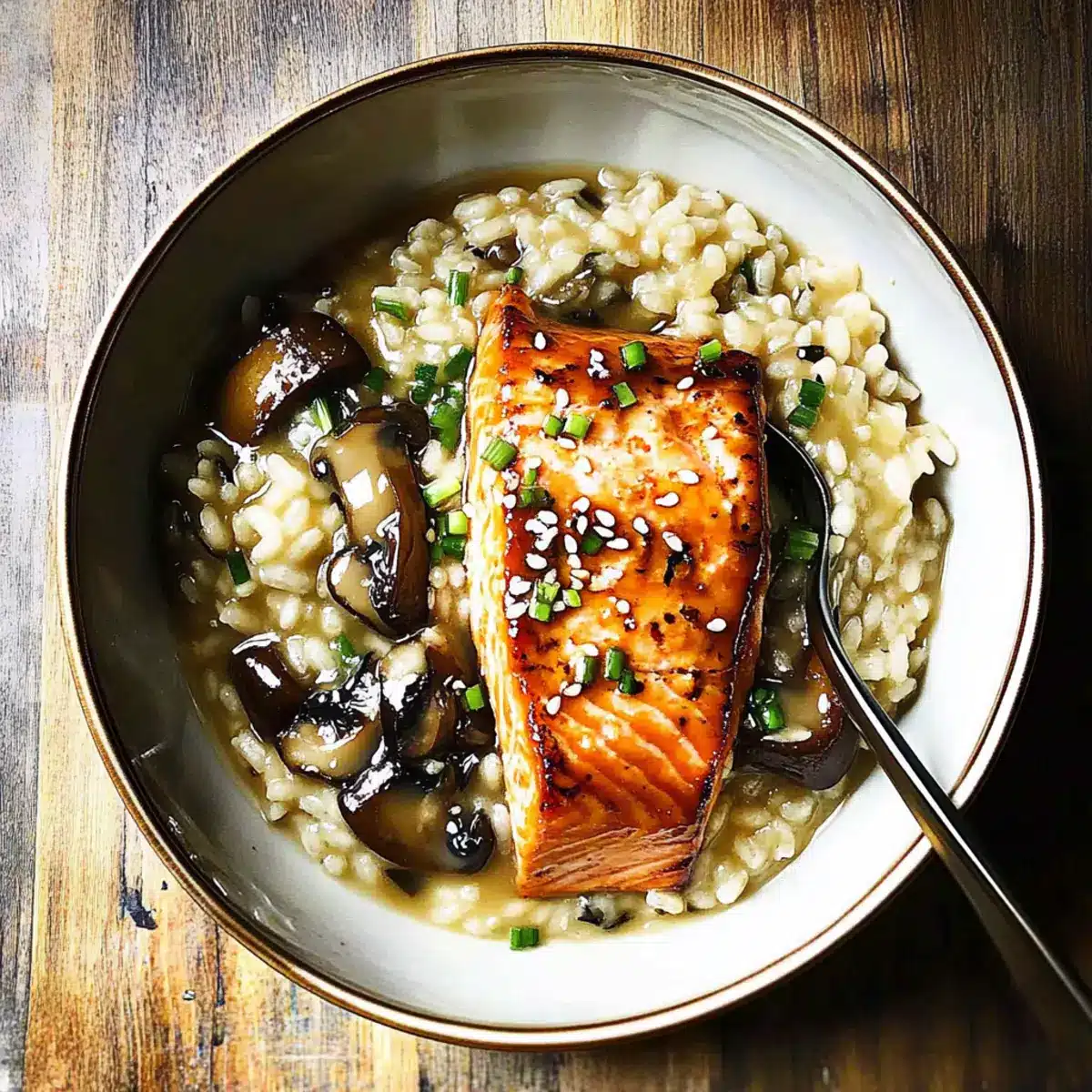
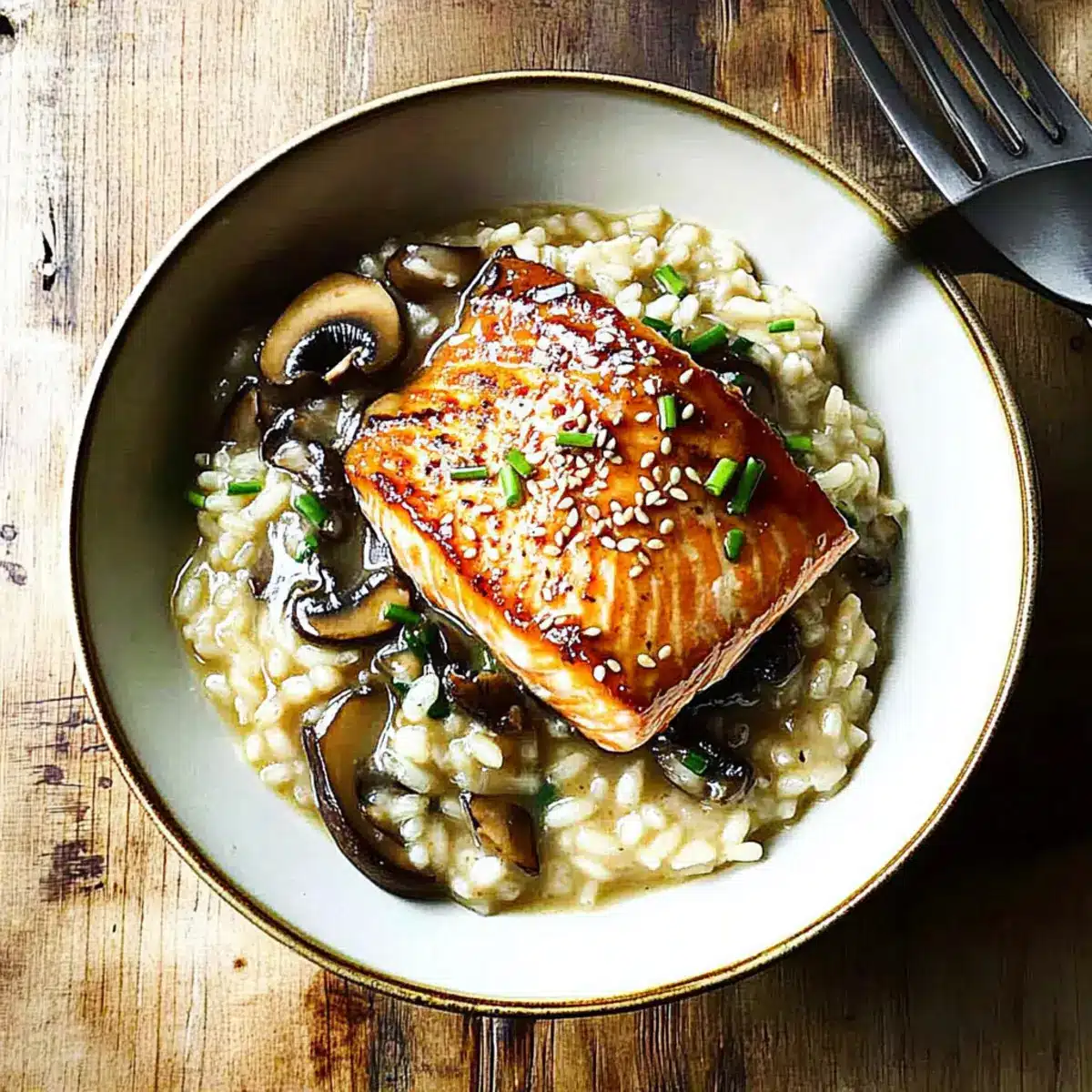
To plate the Japanese Style Risotto, scoop a generous portion onto each dish and place a salmon fillet on top. Garnish with freshly cracked black pepper, chopped chives, and a sprinkle of sesame seeds for added texture and flavor. Serve immediately for a warm, comforting meal.
Make Ahead Options
Preparing the Japanese Style Risotto with Seared Salmon ahead of time can greatly streamline your meal prep! You can marinate the salmon in soy sauce, white wine, and brown sugar up to 24 hours in advance, ensuring it absorbs all those delicious flavors. The risotto base can be cooked and refrigerated for up to 3 days; reheat gently on the stove, adding a splash of hot chicken broth to restore creaminess. Just before serving, quickly sear the marinated salmon for about 4 minutes per side until cooked through, then plate it over the reheated risotto. This way, you’ll enjoy a gourmet meal with minimal effort, perfect for busy weeknights!
Japanese Style Risotto with Seared Salmon Variations
Feel free to let your creativity shine as you customize this dish to suit your taste preferences or dietary needs!
- Dairy-Free: Use olive oil and omit butter for searing to accommodate lactose sensitivity.
- Vegetarian: Replace salmon with grilled tofu or tempeh, and use vegetable broth instead of chicken broth, enhancing the umami with extra veggies.
- Gluten-Free: Substitute low sodium soy sauce with tamari for a gluten-free option. It maintains a rich flavor without the gluten.
- Extra Heat: Add a pinch of red pepper flakes or drizzle some sriracha over the finished dish for a spicy kick that balances the umami.
- Herb Infused: Mix in fresh herbs like basil or cilantro at the end to introduce a refreshing twist that brightens up the dish.
- Citrus Zest: Grate some lemon or lime zest over the plated risotto before serving for a refreshing burst that elevates the overall taste.
- Texture Twist: Stir in toasted pine nuts or crushed cashews for added crunch that contrasts beautifully with the creaminess of the risotto.
- Umami Boost: Incorporate dried seaweed or a splash of fish sauce along with the broth for an extra umami kick that honors Japanese flavors.
Excited to explore new flavor dimensions? Pair it alongside a bright salad or my delicious Bang Bang Salmon for a delightful meal combo!
What to Serve with Japanese Style Risotto with Seared Salmon
The right side dishes can elevate your comforting risotto into a full, delightful meal experience, ensuring every bite is memorable.
-
Sautéed Greens: Lightly sautéed spinach or kale adds a vibrant color and freshness that balances the richness of the risotto and salmon.
-
Crispy Tempura Vegetables: These crunchy delights offer a fun texture contrast, enhancing your meal with an unexpected crunch and a hint of sweetness from the batter.
-
Miso Soup: A warm bowl of miso soup continues the umami theme, providing a soothing touch to your dinner that makes every bite feel like a hug.
-
Cucumber Salad: Refreshing and crunchy, a simple cucumber salad drizzled with rice vinegar or sesame dressing cleanse the palate beautifully between bites.
-
Pickled Radishes: These tangy bites add a delightful sharpness that contrasts with the creamy risotto, making each mouthful exciting.
-
Chilled Sake: The delicate flavors and smooth texture of chilled sake create a harmony with the meal, enhancing the culinary experience and bringing a touch of tradition to your dinner table.
How to Store and Freeze Japanese Style Risotto
Airtight Container: Store leftover risotto in an airtight container in the fridge for up to 2 days. Make sure it’s entirely cooled before sealing to maintain freshness.
Freezer: For longer storage, freeze the risotto in a freezer-safe container for up to 1 month. Portion it out for easy reheating later.
Reheating: When ready to enjoy, thaw your frozen risotto in the fridge overnight. Reheat gently on the stove with a splash of broth, stirring to restore its creamy texture.
Add Fresh Toppings: If reheating, consider topping your risotto with freshly cooked salmon or a sprinkle of chives for added flavor and appeal.
Expert Tips for Japanese Style Risotto
-
Perfect Rice Choice: Use short-grain rice like sushi rice or Arborio for the ideal creamy texture. Avoid long-grain rice to maintain the dish’s signature consistency.
-
Frequent Stirring: Stir the risotto frequently to release the rice’s starch. This creates a rich, creamy base—neglecting to stir can lead to a sticky mess.
-
Balanced Flavor: Control the saltiness by opting for low sodium soy sauce or tamari, especially since miso is already quite salty. Taste as you go!
-
Miso Magic: Dissolve white miso paste in hot broth before adding to ensure even distribution throughout your Japanese Style Risotto.
-
Rest the Salmon: Allow the seared salmon to rest for a couple of minutes before serving. This helps retain its moisture and enhances the overall texture.
-
Experiment with Substitutions: Don’t hesitate to swap ingredients like shiitake mushrooms or use different types of greens for garnishing—personalize the dish to suit your taste preferences!
Japanese Style Risotto with Seared Salmon Recipe FAQs
How do I choose the best shiitake mushrooms?
Absolutely! When selecting shiitake mushrooms, look for those that have a firm, plump texture with a moist cap. Avoid any that have dark spots all over or feel mushy. Fresh mushrooms should also have a pleasant earthy aroma, indicating their quality.
How should I store leftover risotto?
The risotto can be stored in an airtight container in the fridge for up to 2 days. Make sure it cools completely before sealing to maintain its freshness. If it thickens upon refrigeration, simply add a splash of broth or water when reheating to restore its creamy texture.
Can you freeze Japanese style risotto?
Certainly! You can freeze the risotto in a freezer-safe container for up to 1 month. Ensure it is completely cooled before freezing. When ready to eat, thaw overnight in the refrigerator, then reheat over low heat on the stove, adding broth as needed to achieve the desired creaminess.
What should I do if my risotto is too thick?
If your risotto ends up too thick, don’t fret! Gradually add hot chicken broth or water in small increments while stirring continuously until you reach the desired consistency. Keeping the heat low helps ensure the rice doesn’t cook further while you adjust the texture.
Are there any dietary considerations for this recipe?
Yes! For gluten-free options, simply substitute soy sauce with tamari. Additionally, those with seafood allergies can easily adapt the recipe by omitting the salmon and enhancing the dish with more vegetables, ensuring it remains delicious and satisfying for everyone at the table.
How can I customize the garnishes?
The more the merrier! While chives and sesame seeds are lovely, feel free to get creative! You might add a sprinkle of toasty nori flakes or a touch of creamy avocado on top, or even some fresh grated ginger for an extra zing.
Japanese Style Risotto with Seared Salmon: Comfort in a Bowl
Ingredients
Equipment
Method
- Marinate the salmon in low sodium soy sauce, white wine, and brown sugar for at least 15 minutes.
- Prepare the vegetables by tearing shiitake mushrooms, dicing celery, mincing garlic, and chopping the onion.
- In a skillet, heat olive oil and sauté the mushrooms for 5-6 minutes until browned, then set aside.
- Add more olive oil to the skillet, sauté onion, celery, and garlic for 2 minutes, then add rice and toast for 1 minute.
- Deglaze with white wine and simmer for 2 minutes. Gradually add hot chicken broth, stirring continuously, for about 15 minutes.
- Mix in sautéed mushrooms and miso paste dissolved in hot broth, cook for 2-3 more minutes, then season with black pepper.
- Sear the marinated salmon in a mixture of oil and butter for about 4 minutes on each side until cooked through.
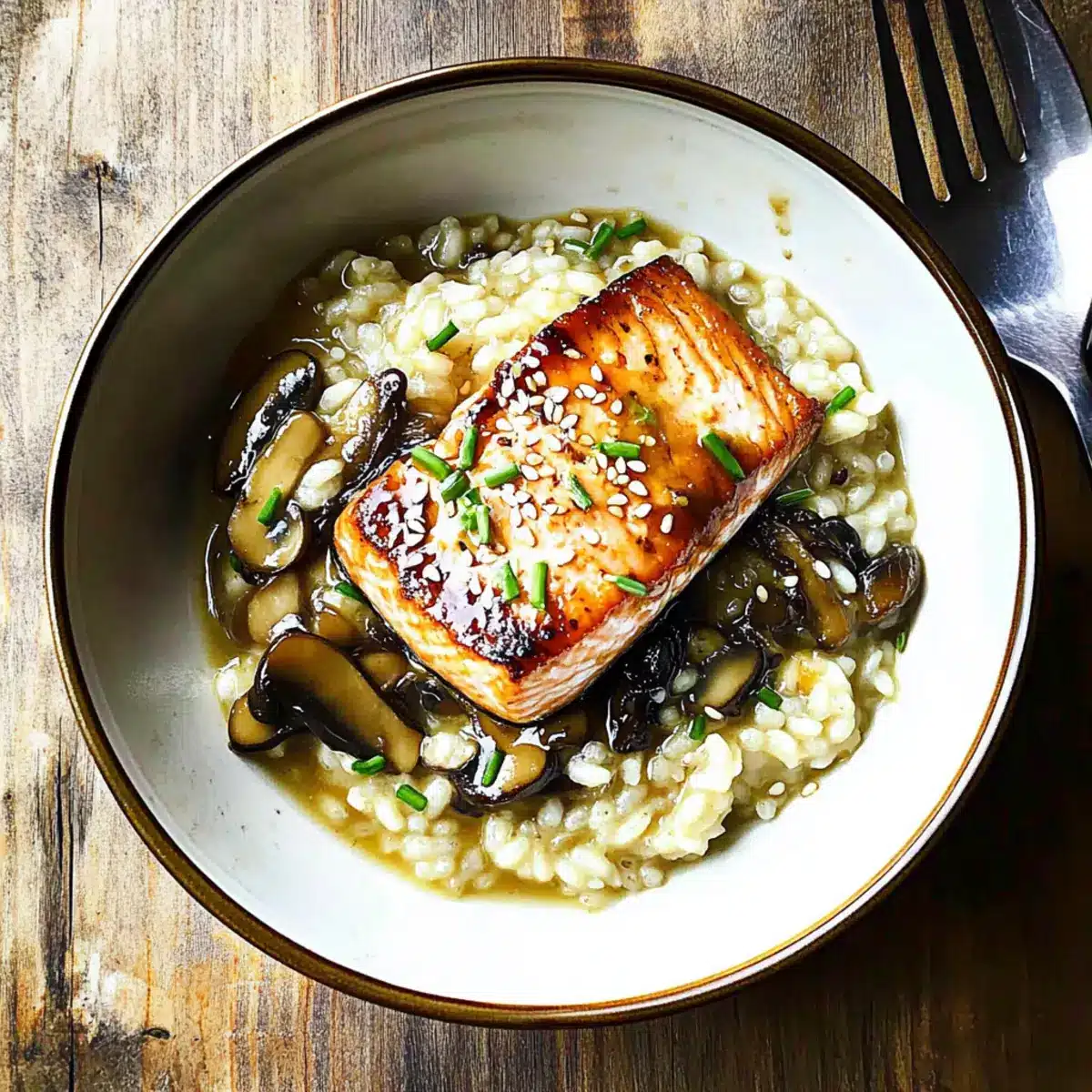
- Plate the risotto, place a salmon fillet on top, and garnish with black pepper, chives, and sesame seeds.
Leave a Reply