
It’s a chilly evening, and all I can think about is wrapping my hands around a steaming bowl of Chinese beef noodle soup. This comforting dish is my go-to for those moments when I crave something hearty and satisfying. With tender beef, chewy noodles, and a savory, aromatic broth, it’s perfect for warming the soul—and did I mention it’s quick to prepare? This recipe takes the complexity of traditional Asian flavors and makes them accessible right in your kitchen, allowing for customizations to suit your taste. Whether you’re hosting friends for dinner or treating yourself to a cozy night in, you’re just a few ingredients away from a culinary adventure. Curious about how to create this delicious bowl of goodness? Let’s dive in!
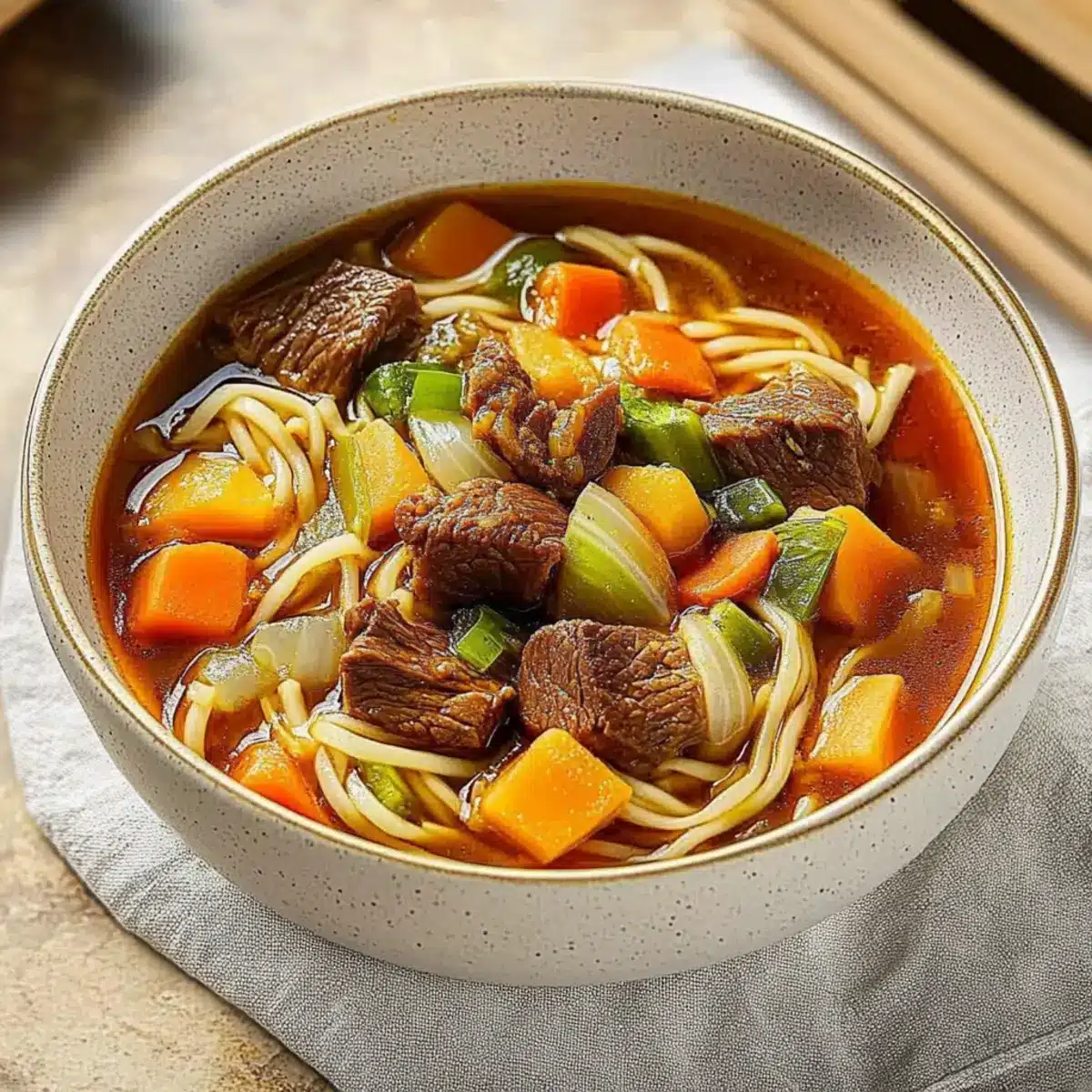
Why is This Soup So Comforting?
Hearty, there’s nothing like a steaming bowl of Chinese beef noodle soup to soothe the soul. Quick to prepare, you can enjoy this deliciousness on a busy weeknight or at a family gathering. Flavorful spices elevate the broth, making it deeply satisfying. Versatile enough for any palate, feel free to adjust the heat with chili bean paste or add your favorite vegetables. For a delightful twist, serve this alongside our Thai Basil Beef for a memorable dinner experience.
Chinese Beef Noodle Soup Ingredients
For the Broth
• Canola oil – Cooking fat for sautéing; can substitute with vegetable oil.
• Szechuan peppercorns – Adds fragrant spiciness; may substitute with black pepper for a milder flavor.
• Boneless beef chuck roast – Main source of protein; tender when braised and can use brisket or shank for different textures.
• Fresh gingerroot – Provides warmth and flavor; substitute with ground ginger, but reduce the amount.
• Water – Creates the soup base.
• Reduced-sodium soy sauce – Adds savory depth; use tamari for a gluten-free version.
• Shaoxing cooking wine – Enhances complexity; substitute with dry sherry or omit for a non-alcoholic version.
• Rock sugar or honey – Balances flavors with sweetness; can use granulated sugar as a substitute.
• Chili bean paste – Provides heat and umami; adjust quantity to taste or substitute with sriracha.
• Star anise – Adds aromatic notes; omit if unavailable, but enhances traditional flavor.
• Bay leaves – Infuses aroma into the broth; use dried basil as an alternative.
• Dried Szechuan chiles – Spice level enhancer; use less spicy peppers for a milder broth.
• Salt – Essential for flavor enhancement.
For the Vegetables
• Carrots – Adds sweetness and texture; can substitute with parsnips or sweet potato.
• Daikon radishes – Adds crispness and a mild peppery flavor; turnip can be used as a substitute.
For the Noodles
• Chinese noodles – Base of the soup providing heartiness; use any noodle type, ensuring not to overcook.
For Garnishing
• Green onions – Garnish and flavor; shallots can be used for a stronger onion flavor.
• Optional ingredients – Garnishes like cilantro leaves and sesame oil can enhance the experience.
This delicious Chinese beef noodle soup is packed with flavors, warmth, and comfort in every slurp!
Step‑by‑Step Instructions for Chinese Beef Noodle Soup
Step 1: Sauté the Spices
In a large pot, heat 2 tablespoons of canola oil over medium heat until shimmering. Add 1 tablespoon of Szechuan peppercorns and sauté for about 1-2 minutes, just until fragrant, then discard the peppercorns. This step creates a flavorful base for your Chinese beef noodle soup that will enrich the broth.
Step 2: Brown the Beef
In the same pot, add 1.5 pounds of cubed boneless beef chuck roast and 2 tablespoons of freshly grated ginger. Cook for 8-10 minutes, stirring occasionally, until the beef is browned on all sides. This caramelization is key for deep flavor in your comforting soup!
Step 3: Create the Broth
Pour in 6 cups of water, then add 1/4 cup of reduced-sodium soy sauce, 1/4 cup of Shaoxing cooking wine, 2 tablespoons of rock sugar (or honey), and 2 tablespoons of chili bean paste. Toss in 2 star anise, 2 bay leaves, 4 chopped green onions, 4 dried Szechuan chiles, and 1 teaspoon of salt. Bring this mixture to a boil over high heat, stirring gently, to combine all those rich flavors for your Chinese beef noodle soup.
Step 4: Simmer the Soup
Once the broth is boiling, reduce the heat to low and let it simmer for 30 minutes. During this time, the beef will become tender and the aromatic spices will infuse your broth. Keep an eye on it, and stir occasionally to ensure an even cook.
Step 5: Add the Veggies
After 30 minutes, stir in 2 sliced carrots and 1 sliced daikon radish, then continue simmering for another 25-30 minutes. Your vegetables should be tender but still have a slight bite. This step brightens the soup and adds a comforting texture.
Step 6: Strain the Broth
Once the vegetables are tender, carefully remove and discard the star anise, bay leaves, and dried chiles from the soup. This will give you a clear broth, letting the flavors shine through in your hearty Chinese beef noodle soup.
Step 7: Cook the Noodles
As the soup finishes, cook your Chinese noodles according to package directions—usually about 5-7 minutes in boiling water. Drain the noodles and add them directly into the soup pot, allowing them to soak up the delicious flavors from the broth.
Step 8: Serve and Garnish
Ladle the steaming Chinese beef noodle soup into bowls and top with additional chopped green onions, a drizzle of sesame oil, and a dab of chili bean paste for extra heat if desired. Serve immediately to enjoy the warmth and comfort of this delightful dish!
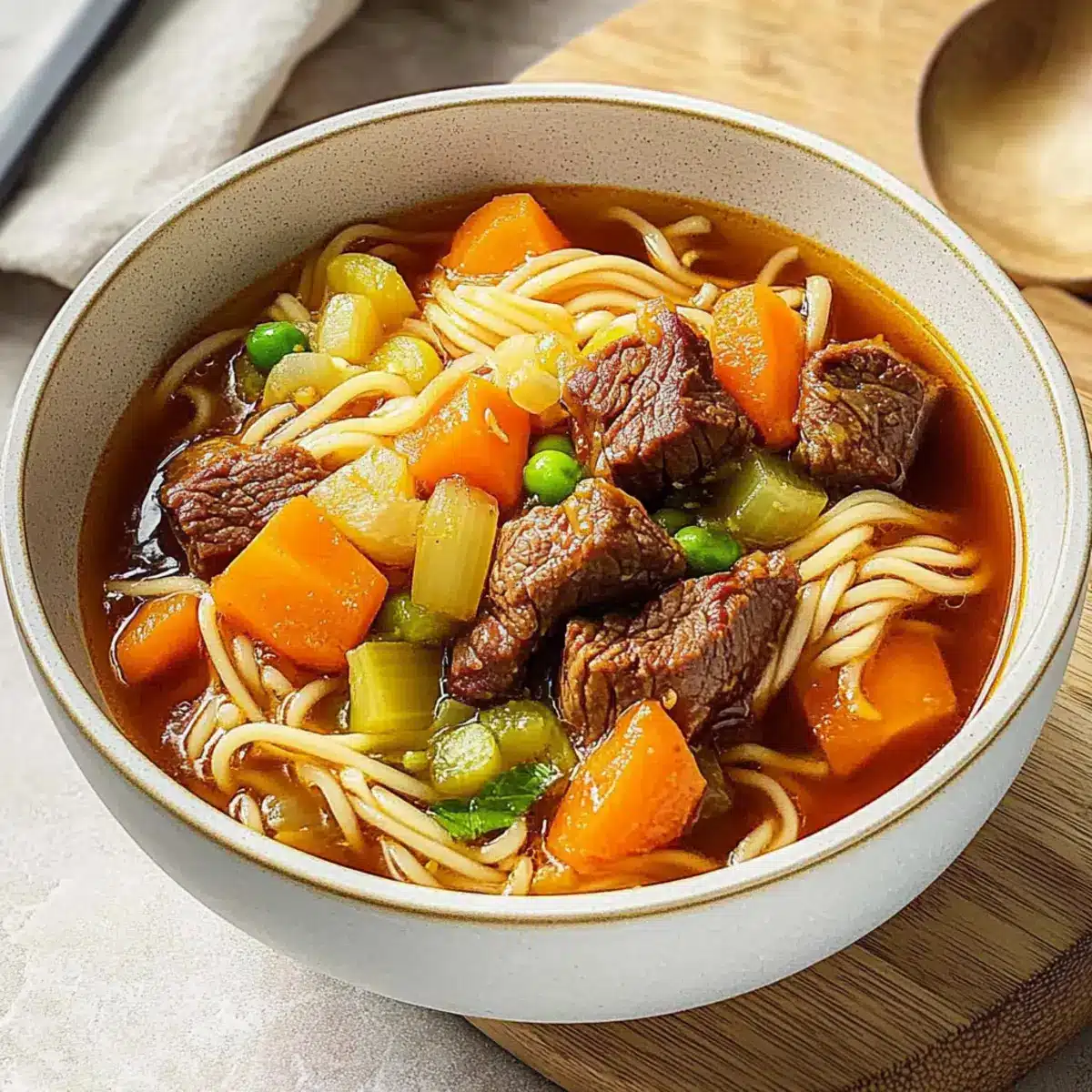
How to Store and Freeze Chinese Beef Noodle Soup
Fridge: Store leftovers in an airtight container for up to 4 days. The flavors often deepen and improve, making the soup even more delicious upon reheating.
Freezer: Freeze soup in portions using airtight containers or freezer bags for up to 2 months. Make sure to leave some space for expansion as the soup freezes.
Reheating: Thaw overnight in the fridge, then gently reheat on the stovetop over low heat. Add a splash of water or broth to revive the soup’s consistency if needed.
Noodles: It’s best to store noodles and broth separately if possible, as the noodles may absorb too much liquid and become mushy when frozen.
Make Ahead Options
These comforting Chinese beef noodle soup preparations are ideal for busy weeknights! You can chop the vegetables (carrots and daikon radishes) and refrigerate them in an airtight container for up to 3 days. Additionally, the soup broth can be made up to 24 hours in advance—just store it in the fridge to keep it flavorful. When you’re ready to enjoy your soup, simply reheat the broth and add the fresh noodles (cooking them according to package directions) for the perfect finish. This way, you’ll have a delicious bowl of homemade Chinese beef noodle soup ready with minimal effort, just as satisfying as if you made it all in one go!
Expert Tips for Chinese Beef Noodle Soup
-
Choose the Right Cut: Use higher fat cuts like chuck roast for richer flavor and tenderness in your Chinese beef noodle soup; they hold up better during long cooking times.
-
Watch the Noodles: Don’t overcook your noodles; they will continue to soften in the broth after being added. Aim for al dente to maintain the perfect texture.
-
Spice to Taste: Adjust the chili bean paste according to your heat preference. Start with less, as you can always add more to achieve your desired spice level.
-
Enhance Flavor: Allow the soup to simmer longer for a more flavorful broth. The longer it simmers, the deeper the flavors will develop, resulting in a comforting dining experience.
-
Customize Veggies: Feel free to incorporate additional vegetables, like bok choy or mushrooms, into your Chinese beef noodle soup for extra nutrition and flavor.
What to Serve with Comforting Chinese Beef Noodle Soup
To create a heartwarming feast around this beloved dish, consider these delightful accompaniments.
-
Steamed Bok Choy: Adding a vibrant pop of green, bok choy brings a subtle crunch that contrasts beautifully with the tender soup ingredients. The freshness brightens your meal and complements the savory broth.
-
Crispy Spring Rolls: These golden delights provide a satisfying crunch, unleashing a burst of flavor with each bite. Filled with veggies and protein, they offer a wonderful side that balances the warmth of the soup.
-
Garlic Fried Rice: Fluffy rice infused with garlic enhances the umami experience, making each spoonful more indulgent. Paired with the rich broth, it creates a cozy meal that your loved ones will savor.
-
Chili Oil: A drizzle of this spicy condiment adds an extra kick to your soup. It’s perfect for those who enjoy a little heat, making it customizable for all spice lovers in the family.
-
Sesame Spinach Salad: This refreshing salad brings a contrasting cold element to the table, with nutty flavors and a zingy dressing. It’s light yet satisfying, cutting through the richness of the noodle soup.
-
Soft Bao Buns: These pillowy buns are delightful and can be filled with meat or veggies, offering a contrasting texture. They serve as a perfect vessel to mop up all that delicious broth after the soup is gone.
Each of these pairings will elevate your dining experience, transforming a simple meal of Chinese beef noodle soup into a heartwarming feast filled with flavors and textures!
Chinese Beef Noodle Soup Variations
Feel free to get creative with your bowl of deliciousness; there are so many ways to tailor this recipe to your tastes!
- Noodle Options: Swap in udon or rice noodles for a different texture and taste experience. Each type offers a delightful twist on this classic dish.
- Heat Levels: Adjust the spice by using fresh chili peppers or a milder hot sauce like sriracha, depending on your palate. Experimenting with heat can make it your own.
- Veggie Boost: Add bok choy, mushrooms, or baby corn for extra nutrition and variety. These veggies will enrich your soup and provide that complementary crunch!
- Herbaceous Twist: For an aromatic kick, toss in fresh cilantro or basil just before serving. This adds freshness and brightens the flavors beautifully.
- Richness Factor: If you love a richer broth, consider adding a splash of coconut milk for a creamy texture. It gives an unexpected yet delightful tropical note.
- Gluten-Free Version: Use rice noodles and gluten-free tamari to make this recipe perfect for gluten-sensitive diets. Enjoy the same comforting flavors without worry!
- Meat Variations: Experiment by substituting beef with chicken thighs or even tofu for a plant-based option. Each swap brings a unique flavor to your bowl!
- Warming Spices: For a cozy twist, try adding a dash of cinnamon or cloves to the broth. It provides warmth and depth that’ll make your soup unforgettable.
Remember, whatever your culinary whims are, you can create your very own version of this comforting bowl of goodness. For an extra flavor boost, consider serving it alongside our delightful Thai Basil Beef; it’ll turn your dinner into an adventure! Enjoy customizing and making this soup truly yours!
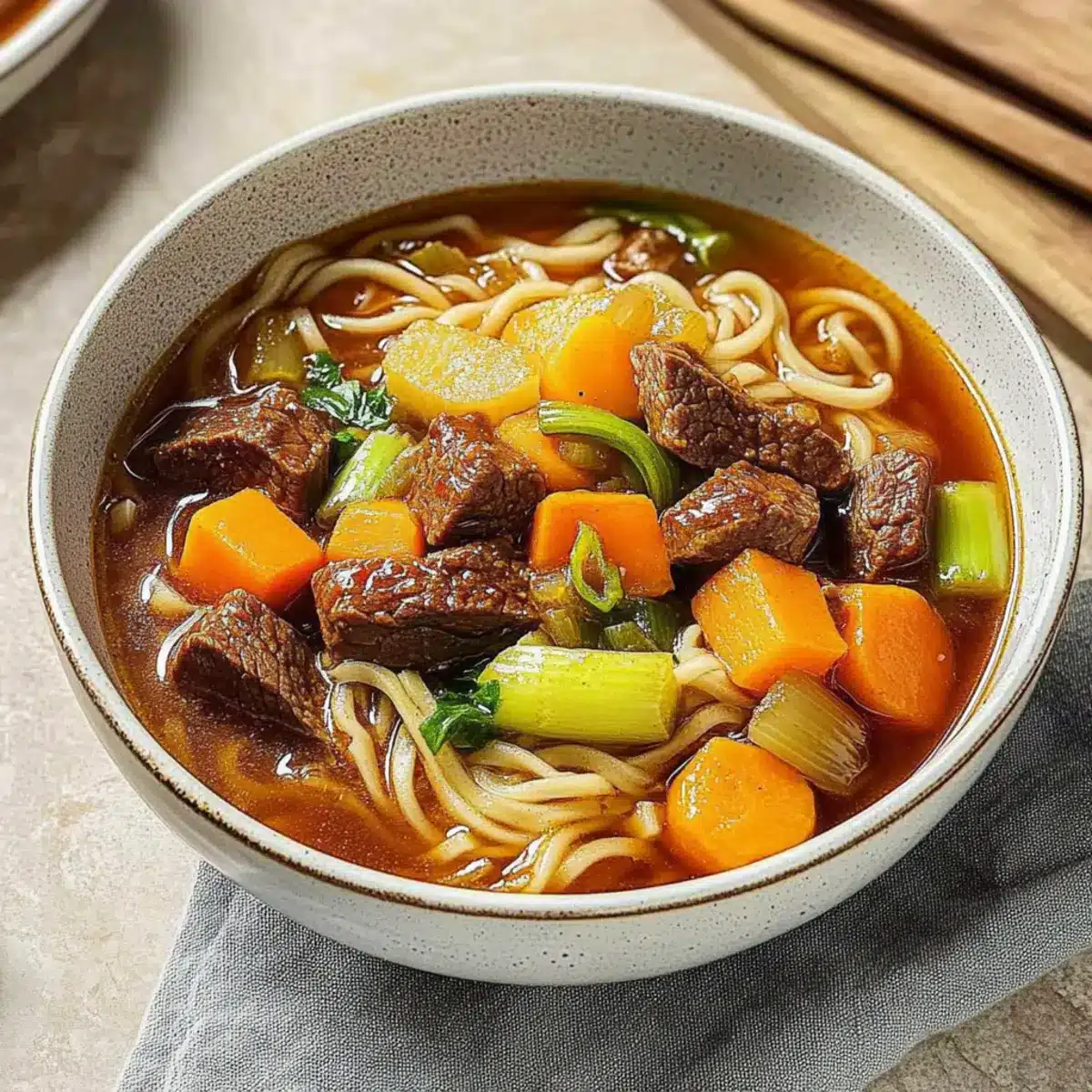
Chinese Beef Noodle Soup Recipe FAQs
How do I choose the right beef for my soup?
Absolutely! For the richest flavor and tenderness, I recommend using higher-fat cuts like boneless beef chuck roast. If you prefer a different texture, brisket or beef shank can also be great alternatives! When selecting your beef, look for well-marbled cuts, as they add richness to the broth.
How should I store leftovers?
Leftovers can be stored in an airtight container in the fridge for up to 4 days. I often find that the flavors deepen and improve upon reheating, making each bowl even more delightful! Just ensure the container is sealed tightly to keep it fresh.
Can I freeze Chinese beef noodle soup?
Certainly! You can freeze the soup in portions using airtight containers or freezer bags for up to 2 months. Make sure to leave some space for expansion, as the soup will expand as it freezes. If possible, store the noodles separately to prevent them from becoming mushy!
What if my broth is too bland?
No worries! If you find your broth lacks flavor, it might be due to insufficient seasoning. I recommend adding a bit more soy sauce, rock sugar, or even a splash of fish sauce for depth. You can also enhance it by simmering it a bit longer to allow those rich flavors to develop—just remember to taste as you go!
Are there any dietary concerns I should consider?
Very! This recipe contains common allergens like soy (in the soy sauce) and gluten (if using regular noodles). For gluten-free options, use tamari instead of soy sauce and gluten-free noodles. If you’re cooking for someone with allergies, always double-check labels to ensure safe ingredients!
Can I use different noodles for this soup?
The more the merrier! You can absolutely use different types of noodles, such as udon or rice noodles. Just be sure to follow the cooking instructions on the package, and keep an eye on them to avoid overcooking. Each noodle type will bring its unique texture to the Chinese beef noodle soup!
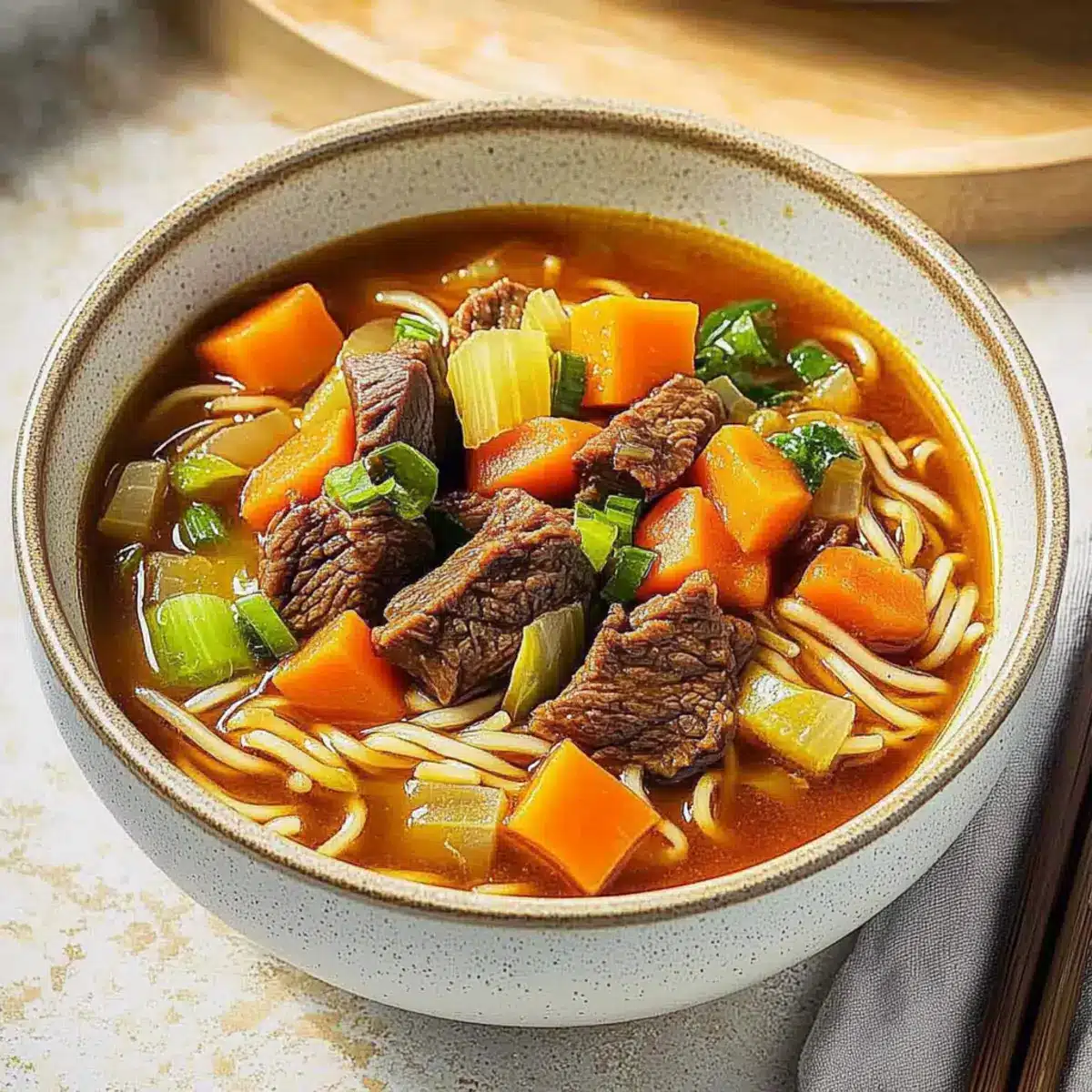
Hearty Chinese Beef Noodle Soup for Cozy Nights In
Ingredients
Equipment
Method
- In a large pot, heat 2 tablespoons of canola oil over medium heat until shimmering. Add 1 tablespoon of Szechuan peppercorns and sauté for about 1-2 minutes, just until fragrant, then discard the peppercorns.
- In the same pot, add 1.5 pounds of cubed boneless beef chuck roast and 2 tablespoons of freshly grated ginger. Cook for 8-10 minutes, stirring occasionally, until the beef is browned on all sides.
- Pour in 6 cups of water, then add 1/4 cup of reduced-sodium soy sauce, 1/4 cup of Shaoxing cooking wine, 2 tablespoons of rock sugar, and 2 tablespoons of chili bean paste. Toss in 2 star anise, 2 bay leaves, 4 chopped green onions, 4 dried Szechuan chiles, and 1 teaspoon of salt. Bring this mixture to a boil.
- Once the broth is boiling, reduce the heat to low and let it simmer for 30 minutes.
- After 30 minutes, stir in 2 sliced carrots and 1 sliced daikon radish, then continue simmering for another 25-30 minutes.
- Once the vegetables are tender, carefully remove and discard the star anise, bay leaves, and dried chiles from the soup.
- As the soup finishes, cook your Chinese noodles according to package directions—usually about 5-7 minutes in boiling water. Drain the noodles and add them directly into the soup pot.
- Ladle the steaming soup into bowls and top with additional chopped green onions, a drizzle of sesame oil, and a dab of chili bean paste for extra heat if desired.
Leave a Reply