
As I lifted the lid, an enticing aroma wafted through the kitchen, instantly brightening my mood. This Japanese Soba Noodle Soup is my go-to dish when I crave something comforting yet light. With its succulent strands of soba noodles nestled in an umami-rich broth, it’s a bowl of warmth that’s entirely vegan and low-calorie. What makes this soup even more appealing is how quick it comes together—perfect for those busy weeknights or when friends drop by unexpectedly. Each spoonful brings together tender tofu, earthy shiitake mushrooms, and crisp bok choy, creating a symphony of textures and flavors that dance on your palate. Ready to indulge in one of the coziest meals of the season? Let’s dive into this delightful recipe!
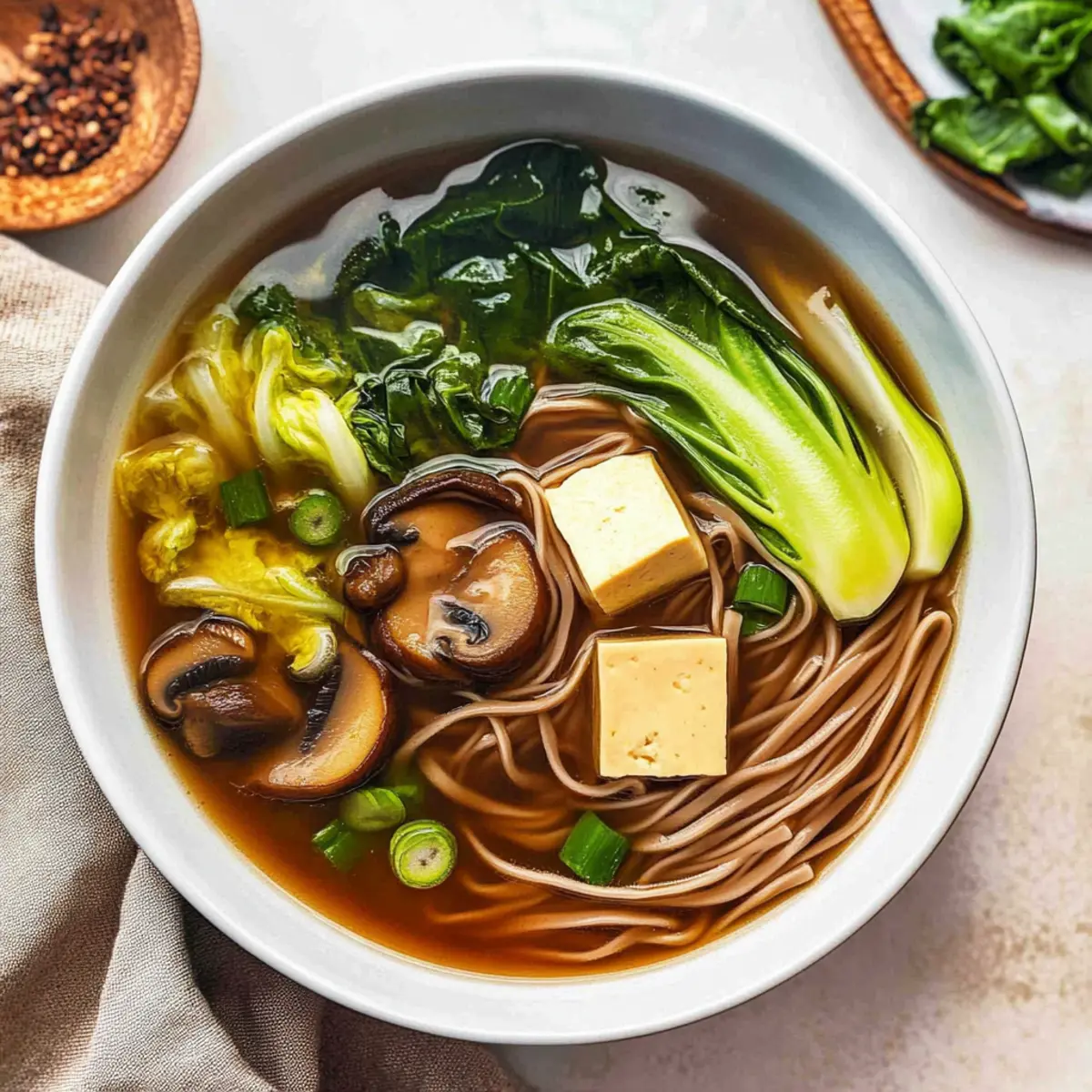
Why is Soba Noodle Soup a Must-Try?
Comfort in a Bowl: You’ll relish every slurp of this Japanese Soba Noodle Soup, where rich, umami flavors envelop tender noodles and fresh vegetables.
Quick and Easy: With minimal prep time, this recipe is perfect for busy nights; it can be ready in just 30 minutes!
Vegan and Low-Calorie: Enjoy a nourishing meal that’s not only kind to the planet but also light on calories—guilt-free comfort food!
Customizable Delight: Feel free to mix and match vegetables for a burst of color and nutrition while exploring different flavor profiles with various miso pastes.
Crowd Pleaser: Impress your friends with this sophisticated yet simple dish that works for any occasion, from casual dinners to cozy gatherings.
Japanese Soba Noodle Soup Ingredients
• Discover what makes this Japanese Soba Noodle Soup irresistibly delicious!
For the Soup
- Dried Soba Noodles – Base of the soup, offers a unique texture and flavor. Substitution: Ramen or udon noodles can be used for a different taste.
- Neutral Oil – For sautéing the mushrooms and garlic, adds richness. Substitution: Use sesame oil for added flavor.
- Shiitake Mushrooms – Provides depth of flavor and chewy texture. Substitution: Oyster or button mushrooms are acceptable if shiitake is too strong.
- Minced Ginger – Adds a warm, spicy note to the broth. Substitution: Fresh garlic can be used for an alternate flavor.
- Miso Paste (White or Yellow) – Essential for building umami in the broth. Variation: Experiment with different types of miso for taste.
- Vegetable Broth – Forms the soup base, providing moisture and flavor. Substitution: Homemade vegetable stock enhances freshness.
- Firm Tofu – Adds protein and texture, making the soup heartier. Substitution: Vegan chicken alternatives can be utilized for protein.
- Baby Bok Choy – Offers a crunchy texture and nutritional benefits. Substitution: Spinach can be used as a leafy green alternative.
- Soy Sauce/Tamari – Adds saltiness and umami depth. Substitution: Low-sodium options are available for a healthier alternative.
- Sesame Oil – Provides nuttiness and enhances flavors. Warning: Only a small amount is needed to avoid overpowering the dish.
- Scallions – Used for garnish and added freshness. Substitution: Chives can be a substitute for flavor.
Step‑by‑Step Instructions for Japanese Soba Noodle Soup
Step 1: Prepare the Vegetables
Begin by thoroughly cleaning and slicing your shiitake mushrooms and chopping the scallions. Mince about a teaspoon of fresh ginger, which will infuse the broth with warmth. Finally, cut your firm tofu into strips—aim for bite-sized pieces that will absorb the delicious flavors of your Japanese Soba Noodle Soup as they cook.
Step 2: Wash the Bok Choy
Next, rinse the baby bok choy under cold water to remove any dirt or grit. Depending on their size, slice them in half or quarters to ensure they cook evenly. Prepare these greens to add a crisp, vibrant touch to your comforting Japanese Soba Noodle Soup, increasing both texture and nutritional value.
Step 3: Sauté the Mushrooms
In a large pot, heat a tablespoon of neutral oil over medium heat. Add the sliced shiitake mushrooms and sauté for about 5-7 minutes, stirring frequently until they start to brown and become fragrant. This step creates a beautiful base for your soup and enhances the umami flavor that defines a great Japanese Soba Noodle Soup.
Step 4: Mix Miso and Ginger
Lower the heat slightly and add the minced ginger to the pot with the mushrooms. Stir in miso paste, adding a splash of the vegetable broth to help it dissolve smoothly. Cook for an additional minute to awaken the flavors, creating a rich and aromatic foundation for your Japanese Soba Noodle Soup.
Step 5: Add the Broth
Stir in the remaining vegetable broth and bring the mixture to a gentle simmer over medium heat. Allow the soup to simmer for about 5 minutes, letting the flavors meld beautifully. You’ll notice the fragrant aroma filling your kitchen, promising a delicious bowl of Japanese Soba Noodle Soup.
Step 6: Cook the Soba Noodles
While the broth simmers, boil a pot of water and cook the soba noodles according to package instructions, usually around 5-7 minutes until slightly underdone. Drain and rinse them under lukewarm water to prevent sticking. This step prepares the soba noodles to perfectly absorb the soul-warming broth of the Japanese Soba Noodle Soup.
Step 7: Add Tofu and Bok Choy
Return to the pot and add the sliced tofu and chopped bok choy. Cook everything together for about 3-5 minutes until the bok choy wilts and the tofu is thoroughly heated. The vibrant greens and tender tofu will complement the hearty broth of your Japanese Soba Noodle Soup beautifully.
Step 8: Season the Soup
Stir in soy sauce and a drizzle of sesame oil, cooking for 1-2 minutes more. This final touch adds depth and richness to the flavors of your Japanese Soba Noodle Soup. Taste the broth and adjust seasonings to your liking, ensuring every spoonful bursts with flavor.
Step 9: Combine and Serve
Add the cooked soba noodles to the soup right before serving, making sure everything is hot and well combined. Check the seasoning one last time and serve the Japanese Soba Noodle Soup immediately, garnished with fresh scallions for a lovely pop of color and flavor.
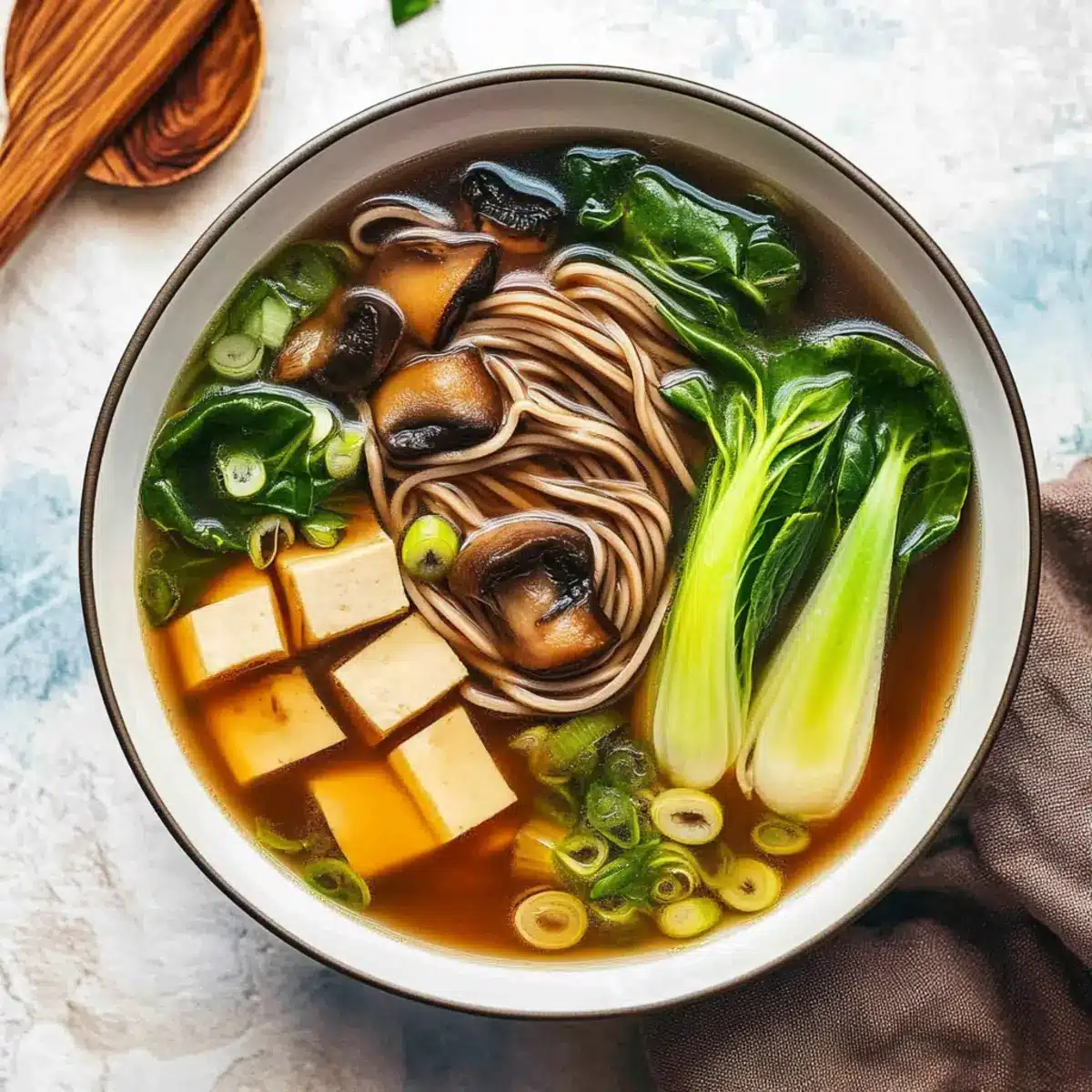
Japanese Soba Noodle Soup Variations
Feel free to get creative and make this Japanese Soba Noodle Soup your own with these delightful twists!
-
Spicy Kick: Add chili oil or red pepper flakes for a touch of heat that elevates the flavors beautifully. Spice can awaken your senses, turning a comforting bowl into an exciting culinary adventure!
-
Veggie Boost: Incorporate colorful vegetables like bell peppers, carrots, or zucchini for added nutrition and vibrant aesthetics. Each new ingredient brings a burst of freshness that enhances the overall experience.
-
Creamy Twist: Stir in a splash of coconut milk for a creamy richness that beautifully contrasts with the savory broth. A touch of richness can transform your soup into an indulgent treat!
-
Herb Infusion: Use fresh herbs, such as cilantro or basil, to add a fragrant lift. Their bright notes will make each spoonful feel refreshing and inviting.
-
Noodle Variety: If you’re in the mood for something different, try using rice noodles or whole grain pasta as an alternative to soba. These swaps can offer unique textures, making the dish even more delightful.
-
Umami Burst: Swap the regular miso paste for red miso for a deeper, more complex flavor profile. This simple change introduces an entirely new dimension to your comforting soup.
-
Protein Power: For an added protein punch, toss in edamame or chickpeas. This twist keeps things hearty and satisfying while reflecting your nutritional goals.
-
Vegan Chicken: Substitute tofu with marinated tempeh or a store-bought vegan chicken alternative for extra heartiness. A variety of textures will make your bowl even more interesting and fulfilling.
Each of these variations not only adds flavor but opens up a world of new possibilities for your Japanese Soba Noodle Soup. Dive into your pantry and let your creativity run wild!
Expert Tips for Japanese Soba Noodle Soup
- Cook Noodles Properly: Make sure to cook soba noodles until slightly underdone; this prevents them from becoming mushy when added to the broth.
- Balance Flavors: Always taste and adjust seasonings before serving to achieve the perfect balance of umami in your Japanese Soba Noodle Soup.
- Store Wisely: Keep noodles separate from the broth to maintain their texture. Combine only when you’re ready to enjoy a hot bowl of soup.
- Substitution Savvy: Feel free to swap vegetables or tofu for your favorites; this flexibility helps cater to different tastes and dietary needs.
- Miso Variations: Experiment with different types of miso paste to enhance the depth of flavor in your soup; each type brings a unique nuance!
Storage Tips for Japanese Soba Noodle Soup
Fridge: Store leftover Japanese Soba Noodle Soup in an airtight container for up to 3 days. Ensure noodles are kept separate from the broth to maintain texture.
Freezer: For long-term storage, freeze the broth and vegetables in an airtight container for up to 2 months. Noodles should be cooked fresh to preserve quality.
Reheating: When ready to enjoy, thaw the frozen broth in the refrigerator overnight, reheat on the stove, and add freshly cooked soba noodles for the best flavor and texture.
Airtight Storage: Always use airtight containers to prevent any unwanted flavors or freezer burn, ensuring your Japanese Soba Noodle Soup stays delicious.
What to Serve with Japanese Soba Noodle Soup?
There’s nothing quite like creating a wholesome meal around a comforting bowl of soup—let’s enhance those flavors together!
- Crispy Spring Rolls: These light, crunchy bites provide a perfect contrast to the warm broth, making each meal feel like a special occasion.
- Steamed Edamame: Seasoned simply with sea salt, these vibrant green pods bring a fresh, nutty flavor that balances the umami of the soup.
- Miso Glazed Roasted Vegetables: With their caramelized sweetness, these veggies add another layer of savory satisfaction, creating a satisfying medley of tastes.
- Garlic Naan: A warm piece of garlic naan is perfect for dipping and adds a delightful aromatic note that pairs beautifully with the soup’s flavors.
- Cucumber Salad: A cool, refreshing salad dressed in rice vinegar provides a crisp, tangy element that complements the richness of the broth.
- Green Tea: Enjoying a warm cup alongside your Japanese Soba Noodle Soup is a lovely way to enhance relaxation and personal comfort.
- Chili Oil: Drizzle a little over the soup for added heat, enriching the experience with an exciting kick and depth of flavor.
- Fruit Sorbet: End your meal on a light note with a refreshing fruit sorbet, cleansing the palate and providing a bright finish to a cozy dinner.
- Sesame Crusted Tofu Bites: These crunchy bites offer extra protein and texture, making them a delightful addition to elevate your meal.
Make Ahead Options
These Japanese Soba Noodle Soup ingredients are ideal for meal prep, making your weeknight dinner hassle-free! You can chop your vegetables (shiitake mushrooms, bok choy, and scallions) and store them in the refrigerator for up to 3 days. Additionally, your tofu can be prepped by slicing it and kept in an airtight container for similar freshness. To maintain the soup’s quality, prepare the broth separately and refrigerate it for up to 24 hours. When you’re ready to serve, simply reheat the broth, add the prepped veggies and tofu, and cook the soba noodles separately. This way, you’ll enjoy a flavorful, comforting bowl of Japanese Soba Noodle Soup with minimal effort on busy nights!
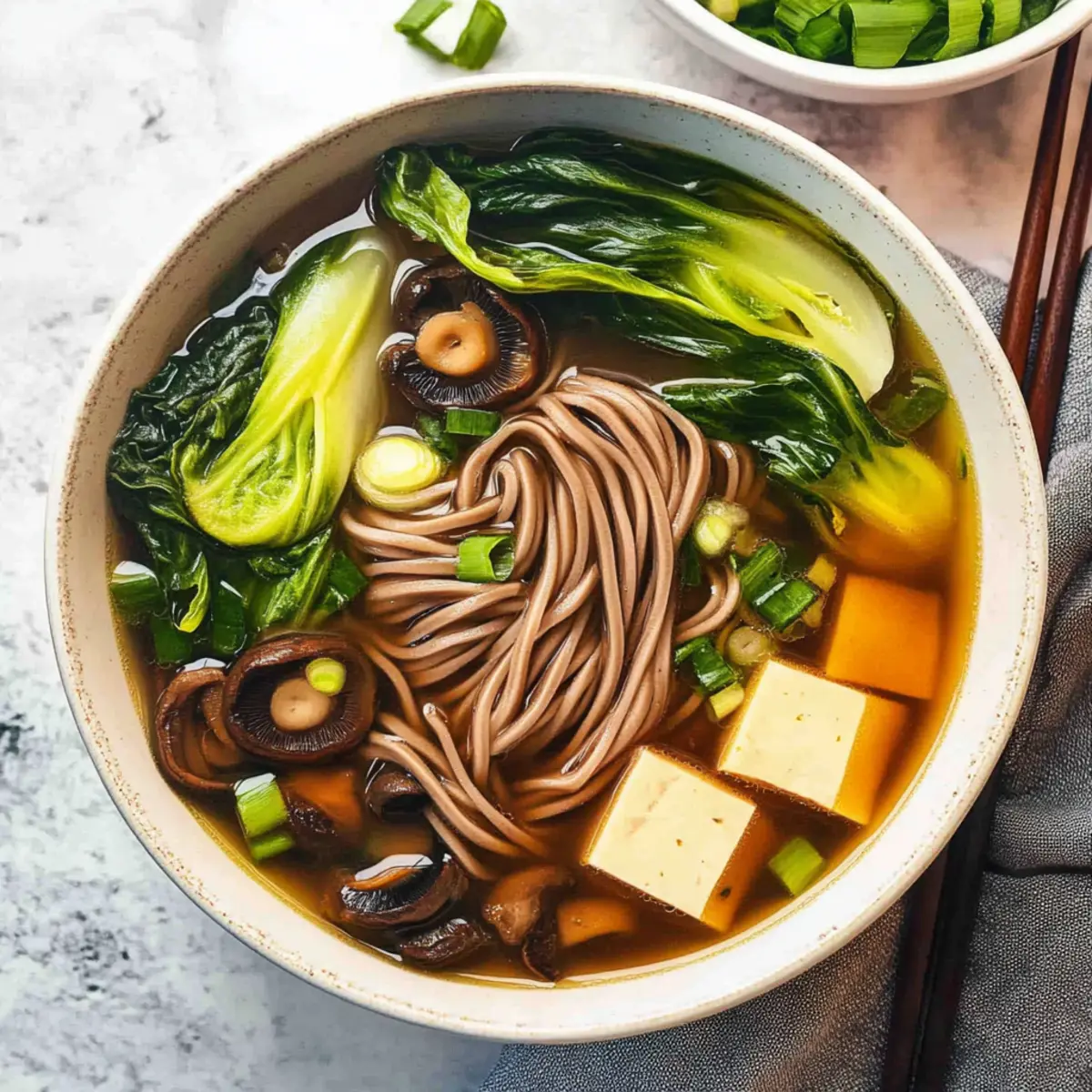
Japanese Soba Noodle Soup Recipe FAQs
What type of soba noodles should I use for this recipe?
Absolutely, using dried soba noodles is recommended as they provide a unique texture and flavor that perfectly complements the soup. If you cannot find them, ramen or udon noodles are great substitutes, each bringing their own character to the dish.
How should I store Japanese Soba Noodle Soup leftovers?
To maintain the quality of your Japanese Soba Noodle Soup, store the broth and noodles separately in airtight containers. The broth can be kept in the fridge for up to 3 days, while cooked soba noodles should ideally be enjoyed freshly made as they can become mushy when stored.
Can I freeze Japanese Soba Noodle Soup?
Yes! For longer storage, you can freeze the broth and vegetables in airtight containers for up to 2 months. When you’re ready to enjoy it, simply thaw the broth overnight in the refrigerator, reheat, and cook fresh soba noodles separately to ensure the best texture and flavor.
What should I do if my miso doesn’t dissolve completely?
No worries! If you find that your miso paste isn’t dissolving well, simply scoop out a small amount, mix it with a bit of warm broth in a separate bowl until it’s smooth, and then stir it back into the pot. This step will help infuse the broth with that rich umami flavor you’re looking for.
Is this recipe suitable for those with soy allergies?
While traditional Japanese Soba Noodle Soup includes soy sauce, you can easily modify the recipe for dietary needs. Use coconut aminos or a homemade broth without soy as alternatives to keep the flavors balanced while being soy-free. Just be sure to check other ingredients for hidden soy as well!
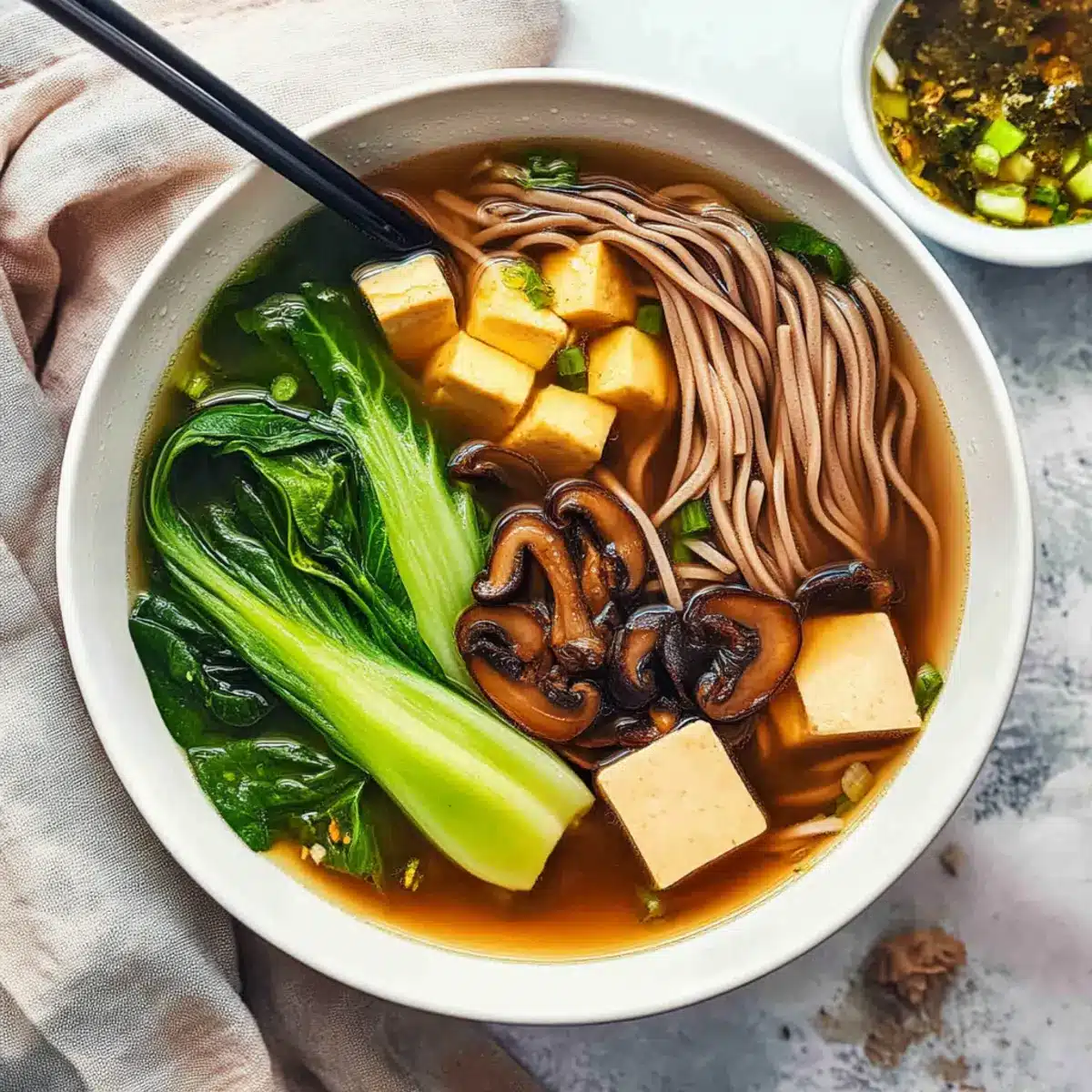
Japanese Soba Noodle Soup for Cozy Nights at Home
Ingredients
Equipment
Method
- Begin by thoroughly cleaning and slicing your shiitake mushrooms and chopping the scallions. Mince about a teaspoon of fresh ginger.
- Rinse the baby bok choy under cold water to remove any dirt or grit. Slice them in half or quarters.
- In a large pot, heat a tablespoon of neutral oil over medium heat. Add the sliced shiitake mushrooms and sauté for 5-7 minutes until browned.
- Lower the heat and add the minced ginger to the pot with the mushrooms. Stir in miso paste, adding a splash of vegetable broth to help it dissolve.
- Stir in the remaining vegetable broth and bring to a gentle simmer over medium heat for about 5 minutes.
- Boil a pot of water and cook the soba noodles according to package instructions, 5-7 minutes. Drain and rinse under lukewarm water.
- Add the sliced tofu and chopped bok choy to the pot. Cook together for 3-5 minutes until the bok choy wilts.
- Stir in soy sauce and a drizzle of sesame oil, cooking for 1-2 minutes more. Adjust seasonings to your liking.
- Add the cooked soba noodles to the soup right before serving. Garnish with fresh scallions.
Leave a Reply