
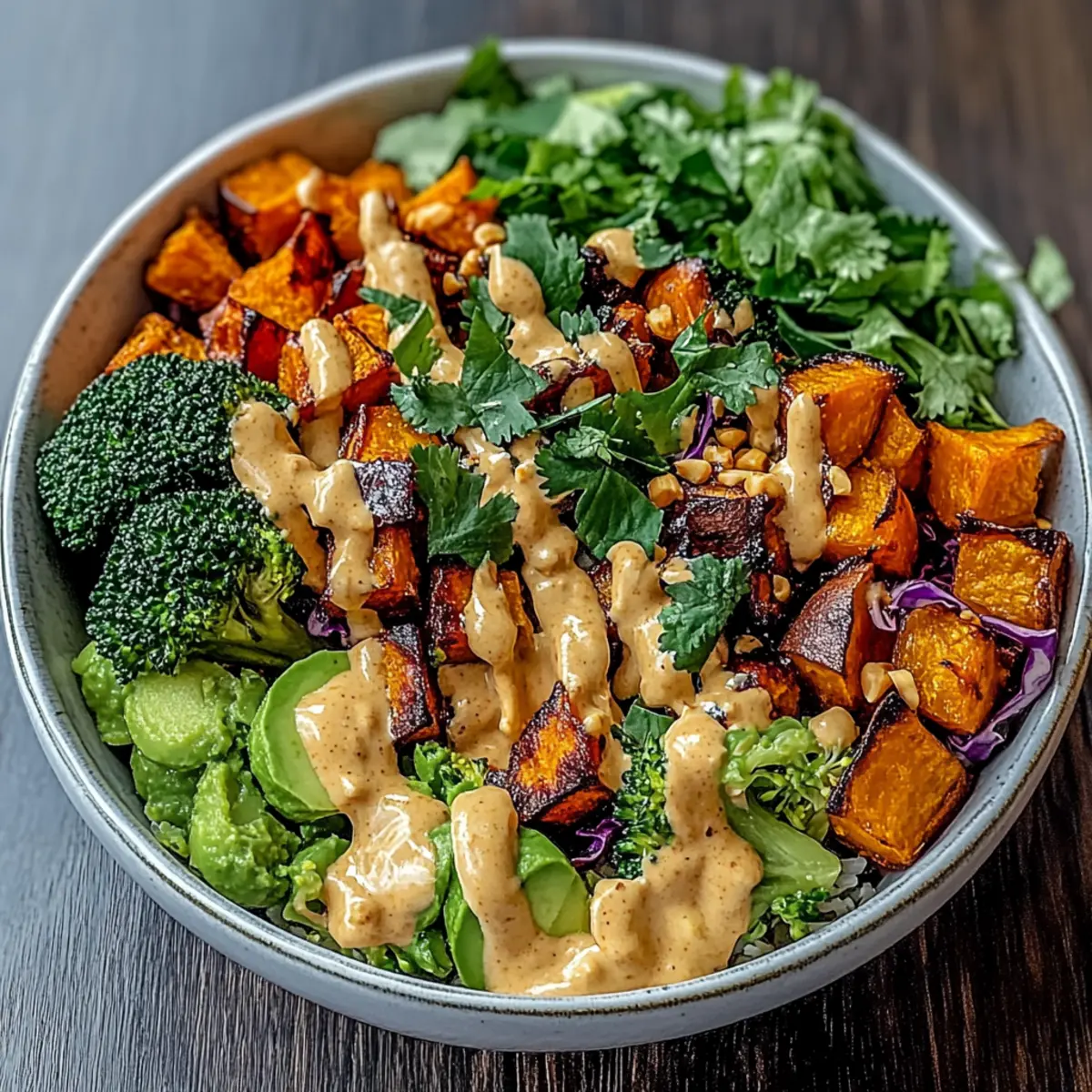
As I stood in my kitchen, the sweet aroma of roasted sweet potatoes filling the air, I couldn’t help but feel a rush of creative energy. That’s the magic of the Thai Peanut Sweet Potato Buddha Bowl! This vibrant dish is not just a feast for the eyes but a celebration of flavor and nutrition. Whether you’re whipping it up after a long day or meal prepping for the week ahead, this customizable bowl offers a delightful blend of textures and tastes, all while being vegan and gluten-free. With the ability to swap in your favorite veggies or sauces, it’s the perfect solution for those of us craving homemade goodness over takeout. Ready to discover how easy it is to create a satisfying meal that nourishes your body and soul? Let’s dive in!
Why is this Buddha Bowl a Must-Try?
Vibrant, Colorful Ingredients: The Thai Peanut Sweet Potato Buddha Bowl is a feast for your eyes, bursting with fresh vegetables and warm, roasted sweet potatoes that add depth and character.
Customizable for Everyone: You can tailor this bowl to fit your taste buds—swap in your favorite veggies or sauces for a personalized touch. Try adding edamame for a protein boost!
Quick and Easy Prep: Perfect for busy weeknights, this dish comes together in just a few simple steps. Roasting sweet potatoes and tossing veggies takes minimal time and effort!
Nutrition Packed: Each bowl brims with vitamins and healthy fats, making it a nourishing meal that fuels your day. It’s a guilt-free indulgence that tastes amazing!
Meal Prep Friendly: Great for meal prepping, store the components separately for week-long enjoyment. Whip up a large batch to savor homestyle cooking without the hassle.
Whether you’re in the mood for a light lunch or a hearty dinner, this Buddha bowl stands out—just like my popular Grilled Thai Coconut recipe. Get ready to impress your taste buds!
Thai Peanut Sweet Potato Buddha Bowl Ingredients
For the Buddha Bowl
- Sweet Potatoes – Adds natural sweetness and a hearty texture; swap with butternut squash for a different flavor.
- Olive Oil – Helps roast the sweet potatoes to crispy perfection; can be substituted with avocado oil.
- Salt – Enhances overall flavor; adjust according to taste.
- Pepper – Adds depth to the flavor; adjust according to taste.
- Broccoli – Provides crunch and nutrition; other cruciferous veggies like cauliflower can be used.
- Shredded Cabbage – Adds freshness and color; substitute with kale or spinach.
- Grated Carrots – Contributes slight sweetness and crunch; available pre-grated for convenience.
- Avocado – Adds creamy texture and healthy fats; can be replaced by tahini for a nut-free option.
For the Peanut Sauce
- Peanut Butter – Key ingredient for the sauce, delivering rich flavor; almond butter is a suitable alternative.
- Soy Sauce – Provides umami; use tamari for a gluten-free option.
- Maple Syrup – Adds sweetness to the sauce; can be swapped for agave syrup.
- Lime Juice – Brightens the flavors of the dressing; lemon juice works well too.
- Sesame Oil – Adds depth to the peanut sauce; use olive oil if unavailable.
For Garnishing
- Fresh Cilantro – Adds fresh flavor and color; can be omitted for allergies.
- Peanuts – Provides a delightful crunch; crush them for the best texture.
This delicious Thai Peanut Sweet Potato Buddha Bowl is simple to prepare and bursting with incredible flavors!
Step‑by‑Step Instructions for Thai Peanut Sweet Potato Buddha Bowl
Step 1: Preheat the Oven
Start by preheating your oven to 400°F (200°C). This temperature is perfect for roasting sweet potatoes, ensuring they become crispy and golden. While the oven heats up, gather your ingredients and preparation tools, including a baking sheet lined with parchment paper for easy cleanup.
Step 2: Prepare the Peanut Sauce
In a small bowl, whisk together creamy peanut butter, soy sauce, maple syrup, lime juice, and sesame oil until well combined. The sauce should have a smooth texture and a vibrant flavor; set it aside as it will enhance the Thai Peanut Sweet Potato Buddha Bowl when you’re ready to serve.
Step 3: Roast the Sweet Potatoes
In a mixing bowl, toss diced sweet potatoes with olive oil, salt, and pepper until evenly coated. Spread the sweet potatoes across the prepared baking sheet in a single layer, ensuring they have space to crisp up. Roast them in the oven for about 25-30 minutes, flipping halfway through, until they are tender and have a golden-brown crust.
Step 4: Mix the Fresh Vegetables
While the sweet potatoes are roasting, combine broccoli florets, shredded cabbage, grated carrots, and sliced avocado in a large mixing bowl. Gently toss the ingredients together until they are evenly distributed. The colorful medley of veggies will add freshness and crunch to your Thai Peanut Sweet Potato Buddha Bowl.
Step 5: Assemble the Buddha Bowl
Once the sweet potatoes are roasted and golden, remove them from the oven and set aside to cool slightly. In a serving bowl, start layering by adding the fresh mixed vegetables first, then generously topping them with the crispy roasted sweet potatoes. Drizzle the vibrant peanut sauce over the entire bowl to tie all the flavors together.
Step 6: Garnish and Serve
For an extra touch, garnish your Buddhist bowl with fresh cilantro and crushed peanuts. These toppings will add flavor and texture, making your Thai Peanut Sweet Potato Buddha Bowl even more delightful. Serve immediately while everything is warm and fresh, and savor every scrumptious bite!
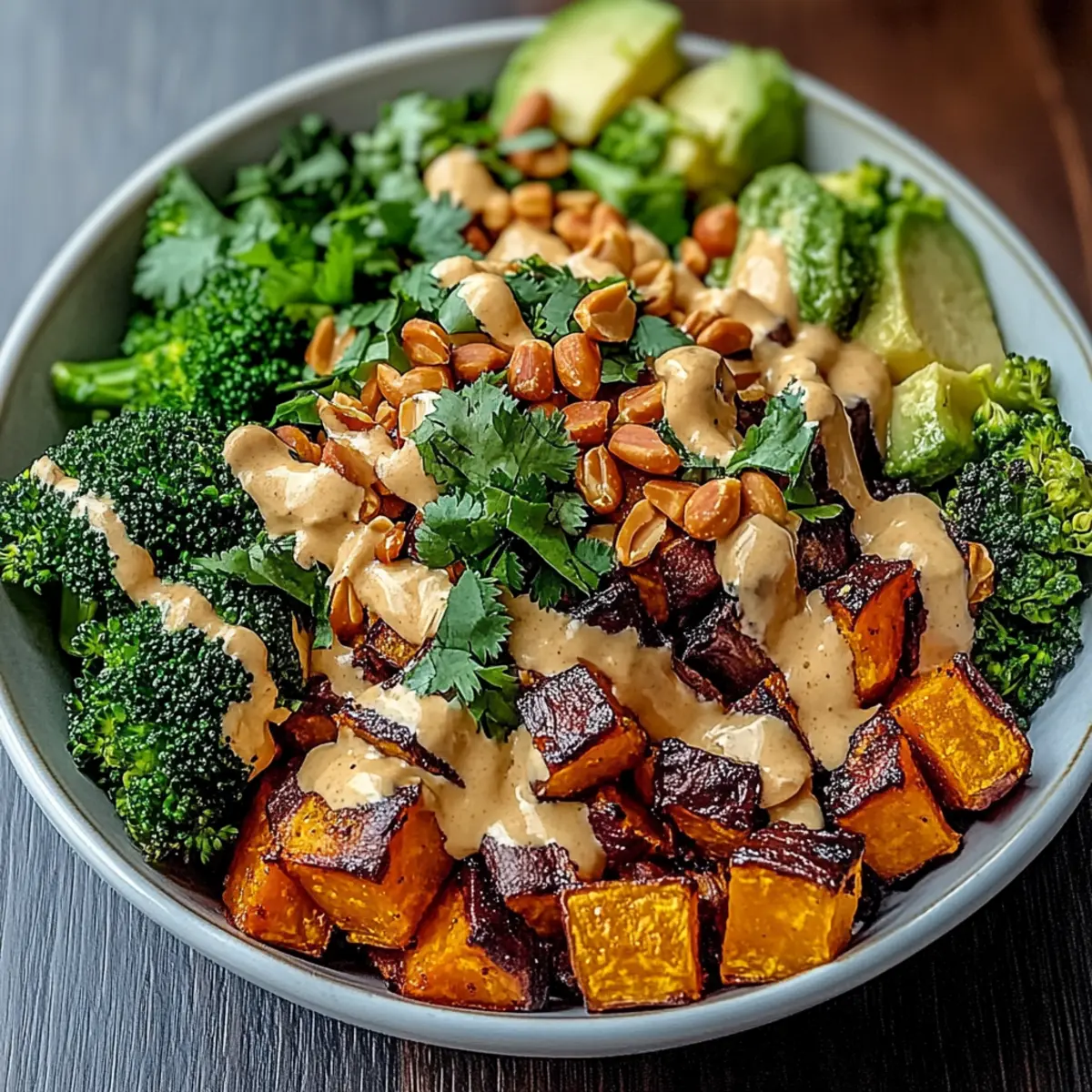
What to Serve with Thai Peanut Sweet Potato Buddha Bowl
The perfect pairing can transform your vibrant bowl into a full, satisfying meal bursting with flavor and texture.
-
Quinoa Salad: A light, protein-packed salad brings a nutty balance, enhancing the Buddha bowl’s sweetness. The fluffy quinoa complements the hearty sweet potatoes beautifully.
-
Steamed Green Beans: Crisp, tender green beans add color and a fresh crunch that contrasts nicely with the creamy peanut sauce and roasted sweet potatoes.
-
Thai Spring Rolls: Fresh spring rolls with crisp veggies and herbs provide a refreshing counterpart, adding a delightful textural contrast that’s harmony with the bowl.
-
Sweet Chili Tofu: Crispy tofu drizzled with sweet chili sauce offers a savory-sweet addition filled with protein, aligning perfectly with the meal while adding an extra layer of flavor.
-
Coconut Rice: Creamy coconut rice pairs beautifully with the spicy peanut sauce, providing a comforting base that enhances the overall flavor profile of the dish.
-
Fruit Salad: A bright, fruity salad with tropical flavors adds freshness and a touch of sweetness that harmonizes with the robust taste of the Buddha bowl.
-
Herbal Iced Tea: Serve chilled herbal tea infused with mint or lemongrass for a refreshing drink that elevates the Thai experience while cooling the palate.
-
Chocolate Avocado Mousse: For dessert, this rich, creamy treat ties the meal together with its smooth texture and healthy twist, satisfying your sweet tooth without guilt.
Expert Tips for Thai Peanut Sweet Potato Buddha Bowl
-
Uniform Sweet Potato Cuts: Ensure sweet potatoes are cut into even pieces for consistent roasting. Uneven sizes can result in some being undercooked and others overcooked.
-
Avoid Sogginess: Store components separately in airtight containers to keep the vegetables crunchy and sweet potatoes crispy. Consume within 3 days for the best texture.
-
Protein Boosting: For added protein, toss in chickpeas or edamame; they complement the flavors of the Thai Peanut Sweet Potato Buddha Bowl wonderfully.
-
Spice it Up: Modify your peanut sauce by mixing in a splash of sriracha or adding red pepper flakes for a delightful spicy kick.
-
Crispy Perfection: If sweet potatoes aren’t crisping properly, spread them in a single layer on the baking sheet, ensuring they have enough space to roast.
Storage Tips for Thai Peanut Sweet Potato Buddha Bowl
-
Room Temperature: Consume leftovers within 2 hours of serving to ensure food safety. This dish is best enjoyed fresh but can be safely stored afterward.
-
Fridge: Store components separately in airtight containers for up to 3 days. Keep the peanut sauce refrigerated to maintain its creamy texture and flavor.
-
Freezer: Roasted sweet potatoes and chopped vegetables can be frozen for up to 3 months. Thaw and reheat in the oven or microwave for best results.
-
Reheating: Warm the Buddha bowl in the microwave or oven until heated through. When reheating, add a splash of water or broth to keep the veggies from drying out.
Make Ahead Options
Preparing your Thai Peanut Sweet Potato Buddha Bowl in advance is a fantastic way to save time during your busy week! You can roast the sweet potatoes and store them in an airtight container for up to 3 days in the refrigerator. The mixed fresh vegetables, such as broccoli, shredded cabbage, and grated carrots, can also be prepped and kept in separate containers for maximum freshness—just chop and refrigerate! The peanut sauce can be made ahead and stored in the fridge for up to 1 week. When you’re ready to enjoy your Buddha bowl, simply reheat the sweet potatoes and assemble with the fresh veggies and sauce, ensuring you have a nutritious, hearty meal with very little effort!
Thai Peanut Sweet Potato Buddha Bowl Variations
Feel free to let your creativity flow and personalize your Buddha bowl experience with these exciting twists!
-
Nut-Free: Substitute peanut butter with sunflower seed butter for a deliciously different flavor without the nuts.
Embrace this nut-free option for those with allergies or sensitivities, and enjoy a creamy yet safe alternative! -
Protein Boost: Toss in chickpeas or edamame to add plant-based protein to your meal.
It transforms your Buddha bowl into a heartier dish while enhancing its nutritional profile significantly. -
Spicy Kick: Add red pepper flakes or a drizzle of sriracha into the peanut sauce for an extra pop of heat.
This simple adjustment will elevate the flavors, making every bite sing with excitement! -
Green Variation: Swap broccoli with kale or spinach for a different take on greens, each providing distinct taste and texture.
Both alternatives add their own nutritional benefits while keeping the bowl vibrant and colorful. -
Citrus Twist: Use orange juice instead of lime juice for a touch of natural sweetness in your dressing.
This sweet note complements the savory elements beautifully, creating a refreshing fusion of flavors. -
Flavorful Swaps: Experiment with avocado oil instead of olive oil for roasting sweet potatoes if you’re after a different taste.
This subtle change introduces a unique richness that pairs wonderfully with the peanut sauce. -
Added Crunch: Sprinkle some toasted sesame seeds or crushed peanuts on top for an extra layer of crunch.
These toppings not only add texture but also achieve a delightful finish with enhanced flavors.
For more tasty ideas, consider pairing your bowl with a vibrant Greek Potato Salad or adding in elements from delicious Thai Basil Beef. Your culinary adventure awaits!
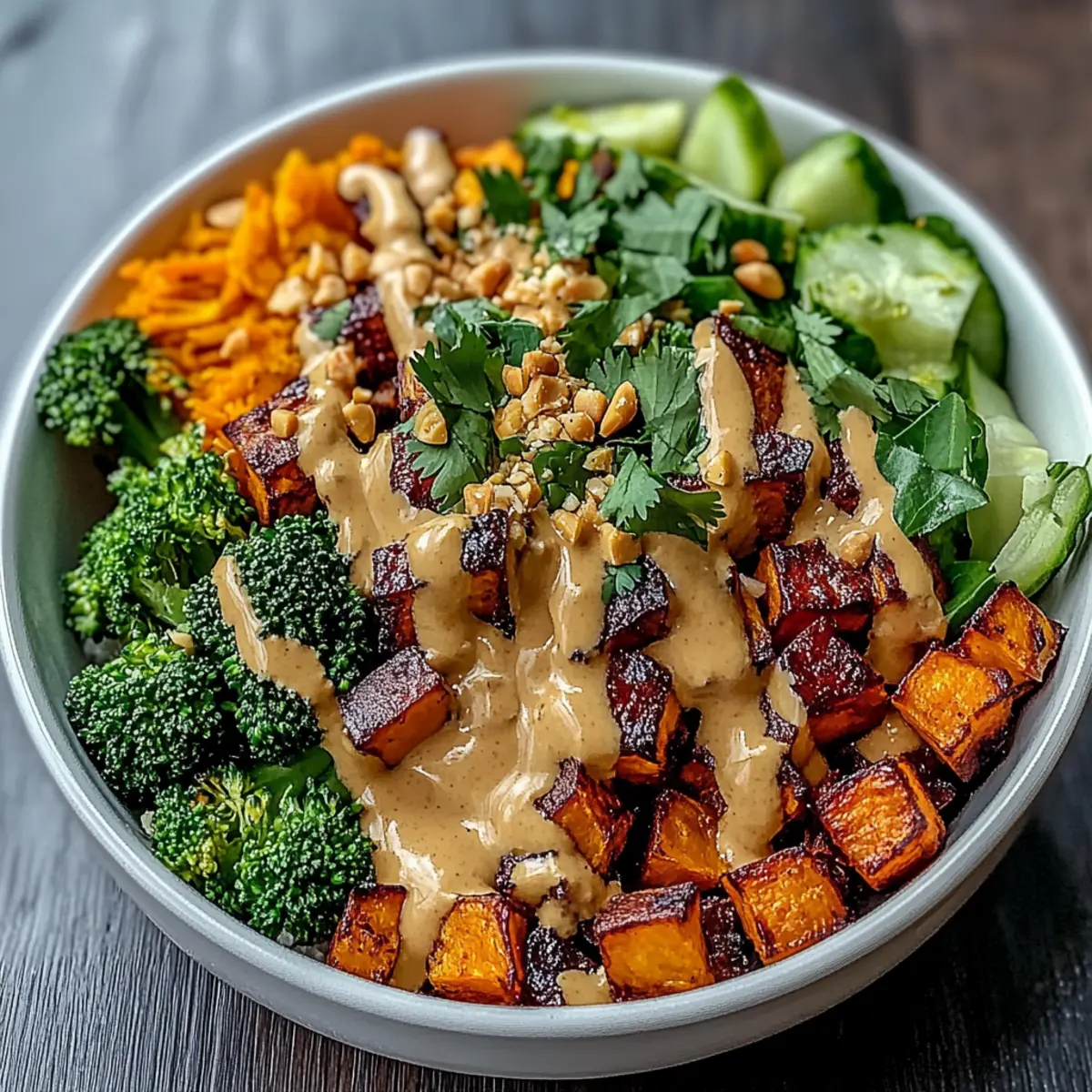
Thai Peanut Sweet Potato Buddha Bowl Recipe FAQs
How do I choose the best sweet potatoes for this recipe?
Absolutely! When selecting sweet potatoes, look for firm ones without dark spots or blemishes. The skin should be smooth and unwrinkled. I find that orange-fleshed sweet potatoes provide the sweetest flavor, but you can also opt for purple or white varieties depending on your preference.
What are the best storage methods for leftovers?
To enjoy your Buddha bowl at its best, store components separately in airtight containers to maintain freshness. The roasted sweet potatoes and veggies can be refrigerated for up to 3 days. Make sure to keep the peanut sauce chilled as well to retain its creamy consistency.
Can I freeze the components of this Buddha bowl?
Very much! You can freeze roasted sweet potatoes and mixed vegetables for up to 3 months. To freeze, place them in a single layer on a baking sheet until solid, then transfer to freezer-safe bags. When you’re ready to use them, simply thaw overnight in the refrigerator and reheat in the oven or microwave for optimal texture.
What should I do if my sweet potatoes are not crisping up?
If your sweet potatoes aren’t achieving that crispy perfection, first ensure they’re cut into even sizes. Spread them out in a single layer on the baking sheet; crowding can lead to steaming instead of roasting. Also, make sure your oven is fully preheated to 400°F (200°C) before placing them inside, as this helps achieve that golden, crispy crust.
Are there any dietary considerations for this recipe?
Absolutely! The recipe is naturally vegan and gluten-free if you replace regular soy sauce with tamari. If you have nut allergies, substitute peanut butter with sunflower seed butter for a nut-free version of the sauce. Always check ingredient labels to ensure they’re suitable for any allergies, especially with sauces and condiments.
How can I customize my Buddha bowl ingredients?
The more the merrier! Feel free to swap in your favorite vegetables and proteins. For a protein boost, mix in chickpeas or edamame. If you prefer a different flavor, try adding roasted cauliflower or zucchini. You can even experiment with various sauces, adding sriracha for heat or using tahini for a milder taste in place of peanut butter.
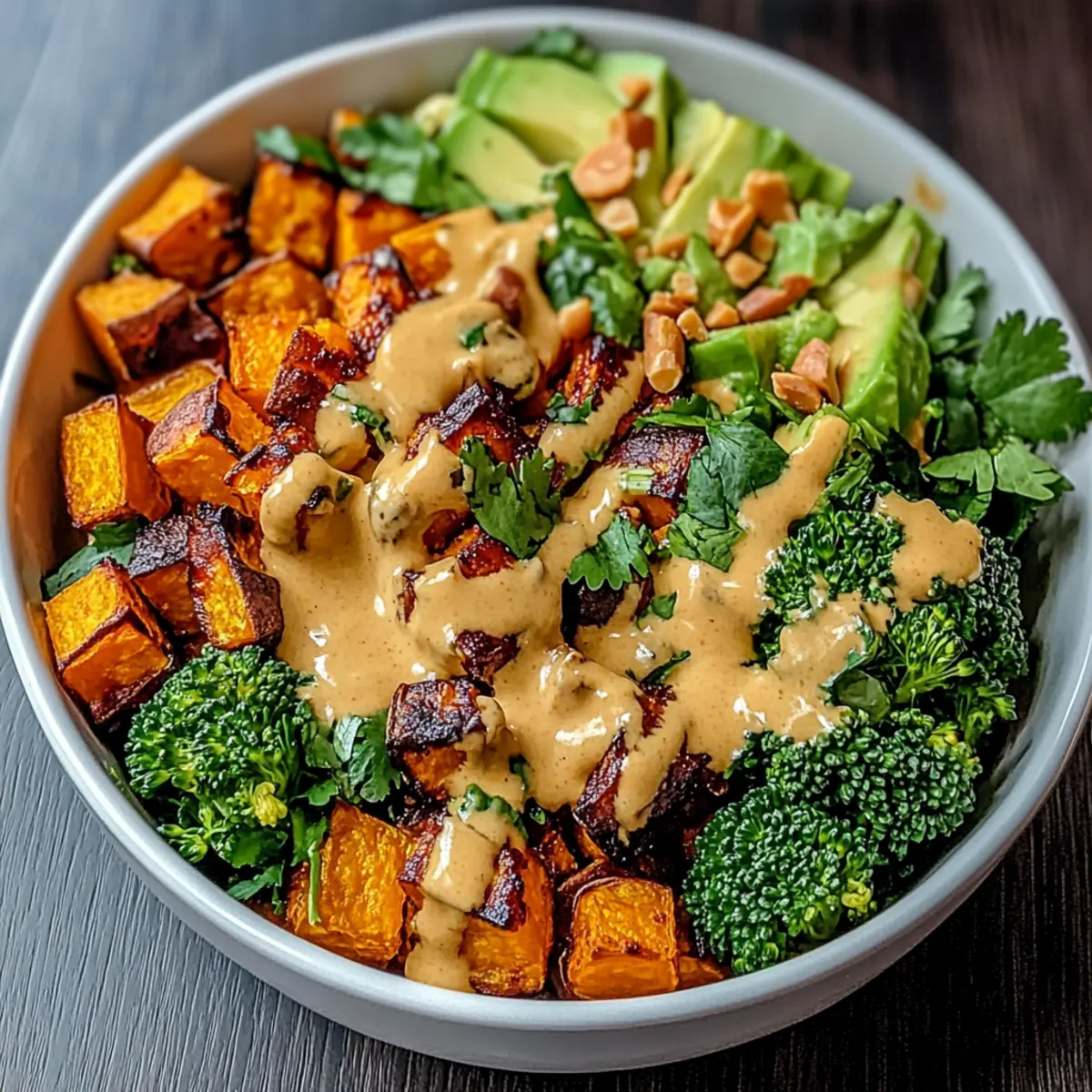
Thai Peanut Sweet Potato Buddha Bowl: Wholesome Flavor Bliss
Ingredients
Equipment
Method
- Preheat your oven to 400°F (200°C). Gather ingredients and tools including a baking sheet lined with parchment paper.
- In a small bowl, whisk together peanut butter, soy sauce, maple syrup, lime juice, and sesame oil until well combined. Set aside.
- In a mixing bowl, toss diced sweet potatoes with olive oil, salt, and pepper until coated. Spread on baking sheet and roast for 25-30 minutes, flipping halfway.
- Mix broccoli, shredded cabbage, grated carrots, and avocado in a large bowl. Toss gently until evenly distributed.
- Once sweet potatoes are roasted, layer fresh vegetables in a bowl, top with sweet potatoes and drizzle with peanut sauce.
- Garnish with fresh cilantro and crushed peanuts. Serve immediately while warm.
Leave a Reply