
As the aroma of sweet and spicy fills my kitchen, it hits me—this isn’t just any meatloaf; it’s a Korean Meatloaf with Gochujang Glaze that’s about to bring a delightful twist to our family dinner. This recipe combines juicy ground pork, fragrant garlic, and tender onions, delivering comfort food that transcends the ordinary. Not only does it feature a unique flavor profile that sparks joy in every bite, but it also comes together quickly, making weeknight cooking a breeze. Imagine serving a dish so captivating that your loved ones ask for seconds—this is that meal! Are you ready to take your taste buds on a delicious adventure?
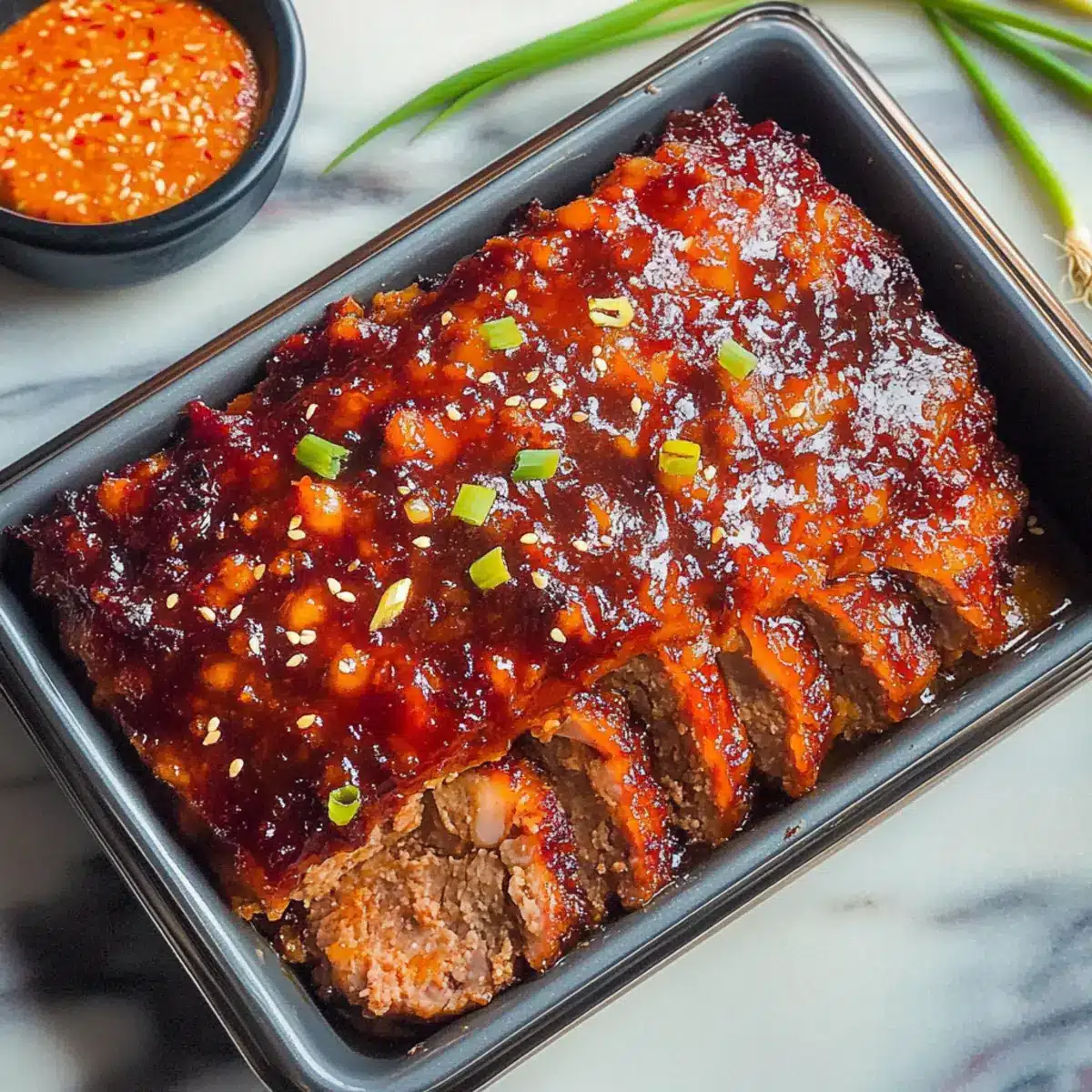
Why Choose Korean Meatloaf with Gochujang Glaze?
Irresistible Flavor: The combination of sweet and spicy gochujang creates a unique taste that elevates classic meatloaf.
Quick and Easy: Perfect for busy weeknights, this dish comes together in no time, allowing you to get a flavorful meal on the table without stress.
Versatile Options: Feel free to substitute ground pork with chicken or beef, or even add diced veggies for a nutrition boost!
Crowd-Pleasing Dish: This meatloaf is not just another recipe; it’s a showstopper that will have your family and friends raving, making it ideal for family dinners or potlucks.
Perfectly Moist Texture: Say goodbye to dry meatloaf! This recipe guarantees a tender and juicy interior, making each slice a delight.
Serve with Style: Pair it with mustard pickled onions for a zesty twist, enhancing the overall flavor experience.
Korean Meatloaf with Gochujang Glaze Ingredients
For the Meatloaf
• Ground Pork – Provides the base and protein; turkey or beef can be a leaner alternative.
• Panko Bread Crumbs – Helps bind the meatloaf and adds texture; substitute with regular breadcrumbs if needed.
• Large Onion – Adds moisture and flavor; can be swapped for shallots for a milder taste.
• Garlic Cloves – Contributes aromatic flavor; fresh garlic is recommended, but garlic powder can be used if necessary.
• Gochujang – Adds a spicy and sweet kick with umami; if unavailable, red chili paste can be an alternative (adjust to taste).
• Green Onions – Enhance freshness and color; substitute with any onion if needed.
• Kosher Salt – For seasoning; use table salt but decrease the amount slightly due to finer grain.
• Large Eggs – Acts as a binder; can be omitted for a vegan version, though texture may vary.
For Cooking
• Vegetable Oil – Used for cooking onions; any neutral oil works well, but olive oil can add a different flavor.
For the Glaze
• Apricot Jam – Sweetens the glaze and balances the heat from gochujang.
• Soy Sauce – Adds depth and umami flavor to the glaze mixture.
• Rice Wine Vinegar – Brings acidity to cut through the richness; can be substituted with apple cider vinegar.
• Honey – Enhances sweetness; adjust to taste depending on preference.
• Sesame Oil – Provides a nutty aroma; can be replaced with another oil if desired.
• Garlic – Included for extra flavor; fresh is ideal but powder may be used in a pinch.
For Garnish
• Sesame Seeds – Optional garnish providing texture; substitute with chopped nuts for an added crunch.
Embrace the bold and wonderful world of flavors with this Korean meatloaf with gochujang glaze!
Step‑by‑Step Instructions for korean meatloaf with gochujang glaze
Step 1: Preheat Your Oven
Begin by preheating your oven to 350°F (175°C) to ensure it reaches the perfect temperature for baking. This allows the heat to circulate evenly around the meatloaf later on, resulting in a beautifully cooked dish. While the oven warms up, gather all your ingredients and have your mixing bowls ready for easy assembly.
Step 2: Sauté the Aromatics
In a medium skillet, heat a tablespoon of vegetable oil over medium heat. Add the minced onion and let it sauté for about 10 minutes, stirring occasionally, until it becomes soft and translucent. Then, add the minced garlic and cook for an additional 2 minutes until fragrant, taking care not to let it burn. Remove from heat and allow this mixture to cool slightly.
Step 3: Prepare the Mixture
In a large mixing bowl, combine the cooled onion and garlic mixture with sliced green onions, gochujang, eggs, and kosher salt. Mix everything well until combined. The gochujang will introduce a sweet and spicy kick to your korean meatloaf with gochujang glaze, creating a flavorful base that complements the meat beautifully.
Step 4: Combine the Meats and Binders
In a separate large bowl, add the ground pork and panko bread crumbs together. Gently fold in the gochujang mixture until everything is evenly incorporated. Take care not to over-mix; you want to maintain that tender texture in your meatloaf. The blend of flavors will promise a delightful dish that your family will love.
Step 5: Shape the Meatloaf
Transfer the meat mixture into a greased loaf pan or shape it into a loaf on a lightly greased baking sheet. Ensure it is compact yet not overly packed to keep it tender. Give it a smooth surface that will allow the glaze to cling well during baking. This step is essential for achieving that perfect shape and texture in your korean meatloaf with gochujang glaze.
Step 6: Bake the Meatloaf
Place the meatloaf in the preheated oven and bake for approximately 40 minutes. You’ll know it’s ready when the internal temperature reaches 140°F (60°C). At this point, the edges should be solidified but the center will still be tender. This baking process creates a wonderful crust that adds flavor to each bite.
Step 7: Prepare the Gochujang Glaze
While your meatloaf is baking, whisk together the glaze ingredients in a small bowl: apricot jam, additional gochujang, rice wine vinegar, honey, soy sauce, sesame oil, and minced garlic. Mix until smooth, ensuring that the flavors meld together beautifully. This glaze will impart a luscious finish, enhancing the savory goodness of your korean meatloaf.
Step 8: Glaze and Finish Baking
Once the meatloaf hits that 140°F milestone, carefully remove it from the oven. Brush a generous amount of the prepared glaze over the top of the meatloaf. Return it to the oven and continue baking for another 10-15 minutes, or until the internal temperature reaches 160°F (71°C). This step ensures a rich, flavorful crust that pulls all the elements together.
Step 9: Rest Before Slicing
After removing the meatloaf from the oven, let it rest for about 10 minutes. Resting allows the juices to redistribute, ensuring each slice remains moist and tender. As it cools slightly, the flavors will settle, making each bite of this korean meatloaf with gochujang glaze a delicious experience.
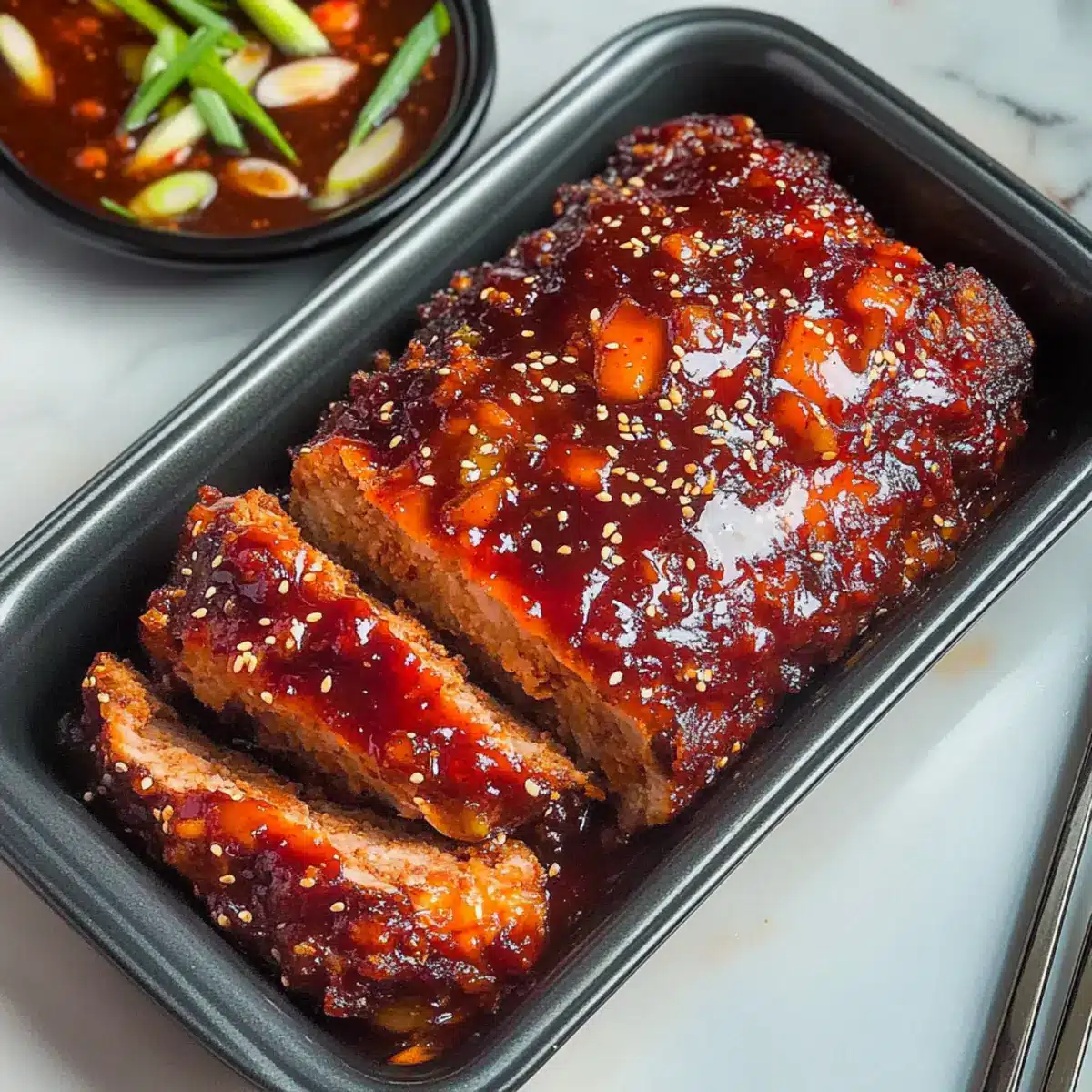
Expert Tips for Korean Meatloaf with Gochujang Glaze
-
Don’t Overmix: Gently combine the meat and ingredients to maintain a tender texture in your Korean meatloaf. Overmixing can lead to a dense final product.
-
Use a Thermometer: Invest in an instant-read thermometer to ensure the meatloaf is perfectly cooked without drying out. Aim for 160°F for optimal juiciness.
-
Prep Ahead: Consider making the glaze and prepping other ingredients in advance. This can streamline your cooking process on a busy night.
-
Flavor Variations: Feel free to experiment with different ground meats or add finely diced vegetables for added nutrition and flavor.
-
Rest the Meatloaf: Allow the meatloaf to rest after baking; this will help keep the moisture locked in, making each slice juicy and flavorful.
-
Serving Suggestions: Enhance your dish by serving with mustard pickled onions or a side of fresh vegetables for extra crunch and taste.
Variations & Substitutions for Korean Meatloaf with Gochujang Glaze
Feel free to get creative with this recipe! Each variation promises a new flavor experience that tantalizes your taste buds.
-
Dairy-Free: Omit eggs and substitute with a flax or chia seed mixture for binding. This keeps the meatloaf moist without any dairy.
-
Vegetarian: Use a plant-based meat substitute for a hearty, meatless option. Textured vegetable protein blended with spices delivers a delightful twist.
-
Spicy Kick: Add diced jalapeños or crushed red pepper flakes to the meat mixture for an extra layer of heat. Your taste buds will spark with excitement!
-
Vegetable Boost: Fold in shredded zucchini or grated carrots for added moisture and nutrition. This brightens the flavor while giving a subtle crunch.
-
Umami Burst: Incorporate a tablespoon of miso paste into the meat mixture for a deep, savory flavor. It beautifully complements the gochujang glaze.
-
Glaze Variations: Experiment with different jams like mango or peach for the glaze—each fruit brings its unique sweetness to your dish. Try adding a splash of lime juice for tang!
-
Nutty Texture: Mix in some chopped walnuts or cashews for a crunchy contrast to the soft meatloaf. The added texture enchants every bite.
-
Fusion Comfort: For a twist, serve your meatloaf with a side of Pan Seared Cod with Garlic Cream Sauce for an adventurous meal blending flavors.
Don’t forget to enjoy experimenting with these variations while creating your very own culinary masterpiece!
Make Ahead Options
These Korean Meatloaf with Gochujang Glaze are perfect for meal prep enthusiasts! You can prepare the meat mixture up to 24 hours in advance; just combine the cooked onion-garlic mixture, ground pork, and panko, then shape it into a loaf and wrap it tightly in plastic wrap before refrigerating. The glaze can also be made ahead and stored in a sealed container for up to 3 days. This allows the flavors to deepen, ensuring your meatloaf is just as delicious when finished. When ready to bake, simply preheat your oven, place the meatloaf in, and apply the glaze, then bake until it reaches the perfect internal temperature. Enjoy hearty, comforting meals without the last-minute stress!
What to Serve with Korean Meatloaf with Gochujang Glaze
As this vibrant meatloaf bakes to perfection, think about how to complement those exciting flavors and textures with the perfect side dishes.
-
Steamed Jasmine Rice: Fluffy rice acts as a neutral base that absorbs the savory gochujang glaze, making each bite satisfying.
-
Roasted Seasonal Vegetables: Caramelized veggies like carrots and bell peppers add a sweet crunch, enhancing the dish’s colorful presentation.
-
Cucumber Salad: A refreshing, tangy cucumber salad balances the meatloaf’s richness, providing a light and crisp contrast.
-
Kimchi: This spicy fermented side adds depth and complexity, channeling authentic Korean cuisine while introducing a healthful twist.
-
Creamy Mashed Potatoes: A rich and buttery potato side provides a comforting texture that pairs beautifully with the meatloaf’s bold flavors.
-
Mustard Pickled Onions: These zesty morsels cut through the meal’s richness and provide a delightful zing that enhances overall enjoyment.
-
Sesame Noodles: A quick noodle salad dressed in sesame oil offers a delightful chewiness and nutty flavor that complements the meatloaf wonderfully.
-
Savory Miso Soup: A warm, comforting bowl of miso soup rounds out the meal, bringing a heartwarming umami flavor that echoes the meatloaf’s richness.
-
Green Tea: Sip a calming cup of green tea before or during the meal to cleanse the palate and enhance the entire dining experience.
Storage Tips for Korean Meatloaf with Gochujang Glaze
-
Fridge: Store leftovers in an airtight container in the fridge for up to 3 days to maintain freshness and flavor.
-
Freezer: For longer storage, freeze the meatloaf in a tightly wrapped portion or in an airtight container for up to 3 months.
-
Reheating: When ready to enjoy, thaw in the fridge overnight, then reheat in the oven at 350°F until warmed through, about 20-25 minutes.
-
Wrapping: If freezing, wrap the meatloaf in foil or plastic wrap to prevent freezer burn and preserve the delicious gochujang flavor.
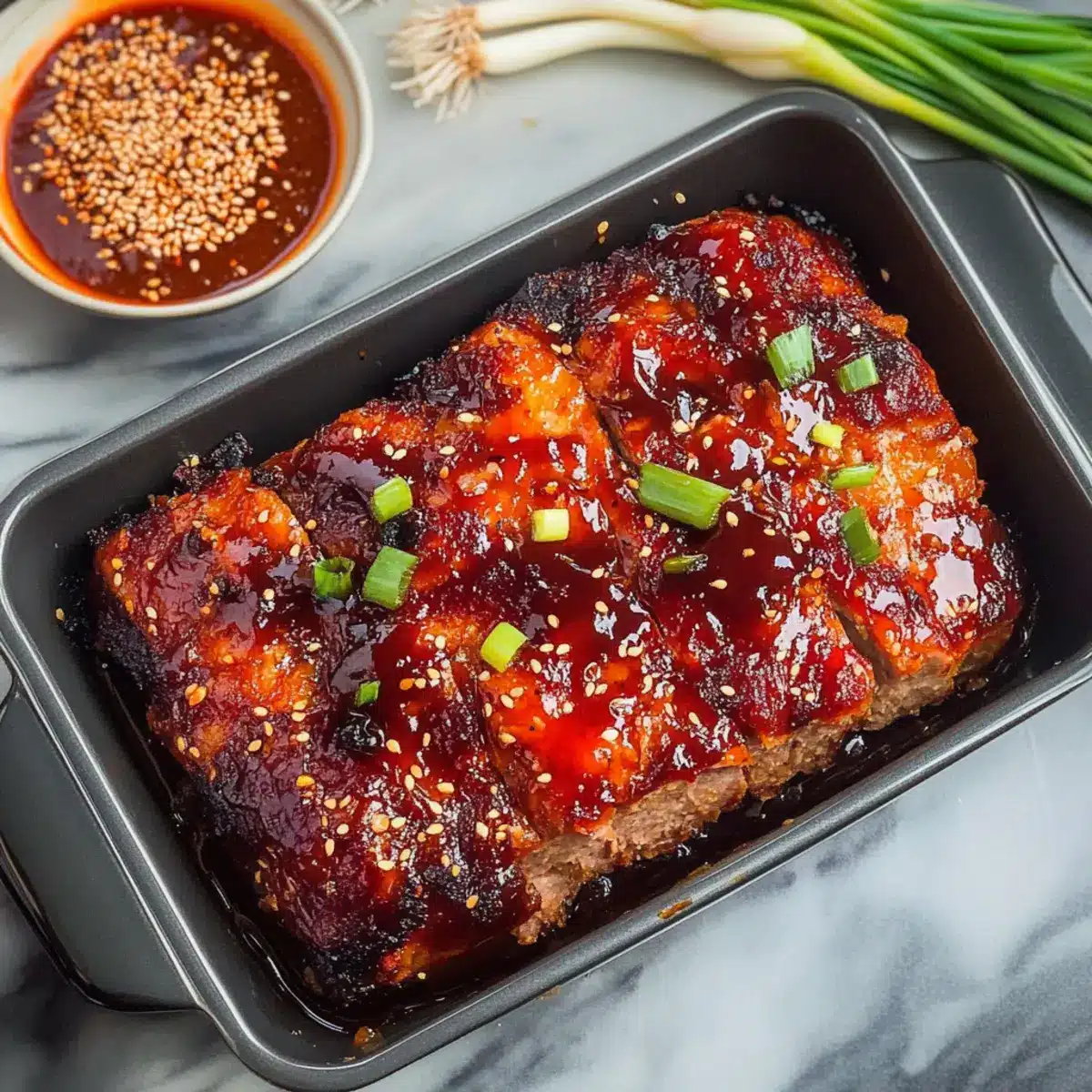
Korean Meatloaf with Gochujang Glaze Recipe FAQs
What type of ground meat should I use for the Korean meatloaf?
Absolutely! While the recipe calls for ground pork for its richness and flavor, you can easily substitute it with ground turkey or beef for a leaner option. Each type has its unique taste and texture, so feel free to experiment and find what you love best!
How should I store leftovers from the Korean meatloaf?
To keep your leftover Korean meatloaf fresh, store it in an airtight container in the refrigerator for up to 3 days. This ensures that the delicious flavors and moisture are preserved. If you have extra, you can freeze it for longer storage—a great option for busy weeknights!
Can I freeze the Korean meatloaf?
Yes! Freezing is a convenient option. After the meatloaf cools, wrap it tightly in foil or plastic wrap, then place it in an airtight container or a freezer-safe bag. It can be stored in the freezer for up to 3 months. When you’re ready to enjoy it again, thaw it in the refrigerator overnight, then reheat in the oven until warmed through.
What if my meatloaf turns out dry?
Ah, this happens occasionally! To avoid a dry meatloaf next time, be sure to accurately measure and mix your ingredients without over-mixing, as this can toughen the meat. Using an instant-read thermometer will help you monitor the internal temperature—aim for 160°F for the juiciest result. If it’s already dry, try serving it with additional glaze to add moisture back!
Is there an alternative for gochujang if I can’t find it?
Very! If gochujang is unavailable, you can use red chili paste as a substitute; however, adjust it to your taste to maintain the balance of sweet and spicy. Additionally, mixing some miso paste with a dash of hot sauce can replicate the umami that gochujang provides.
Can pets eat the Korean meatloaf?
No, it’s best not to share your Korean meatloaf with pets. The dish contains ingredients like garlic and onions, which can be harmful to dogs and cats. Instead, keep it as a delightful family meal and consider making a pet-friendly recipe for your furry friends!
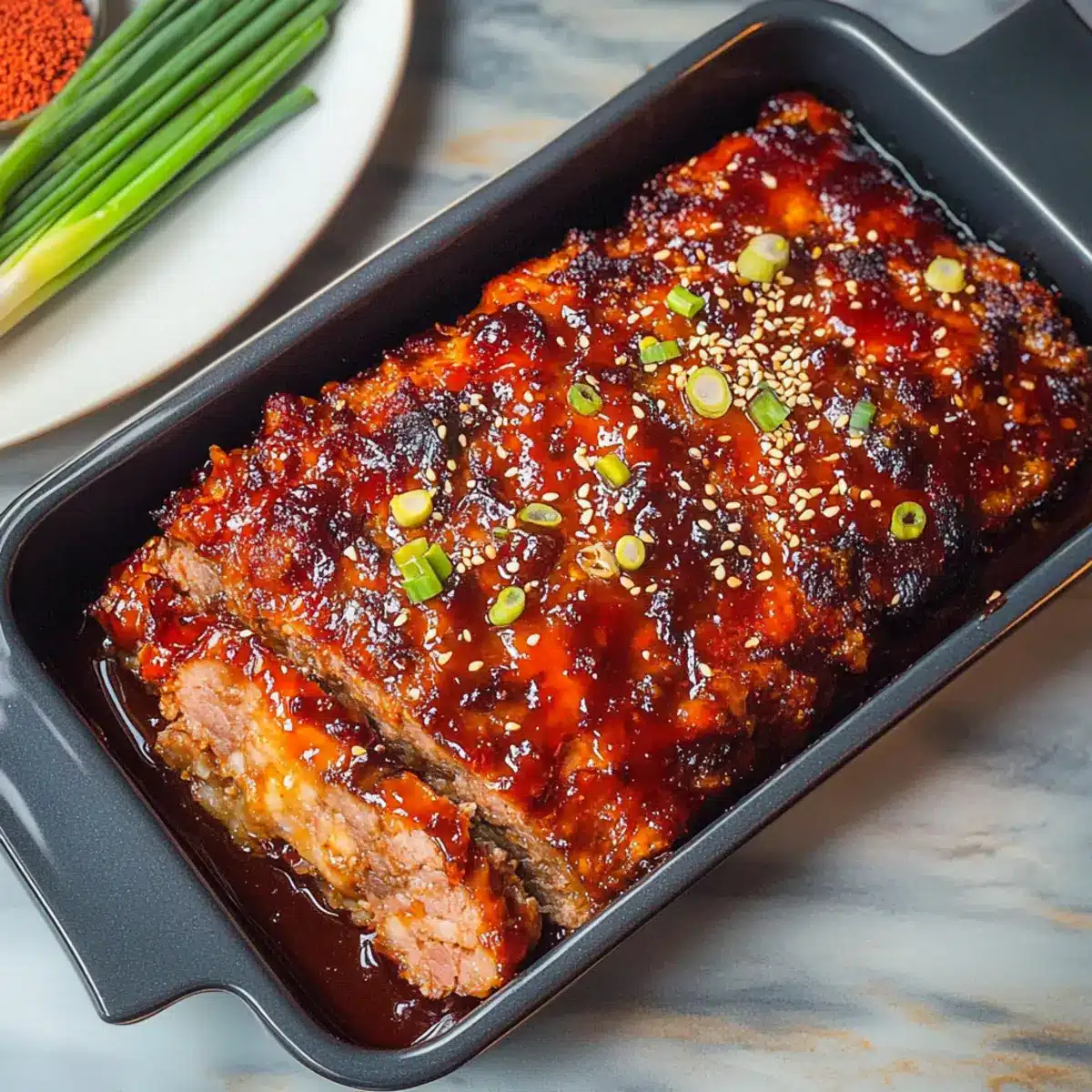
Savory Korean Meatloaf with Gochujang Glaze You'll Love
Ingredients
Equipment
Method
- Preheat your oven to 350°F (175°C).
- In a skillet, heat vegetable oil over medium heat, sauté onion for 10 minutes, add garlic for 2 minutes, then remove from heat.
- In a mixing bowl, combine cooled onion and garlic with green onions, gochujang, eggs, and kosher salt.
- In a separate bowl, mix ground pork and panko, then fold in the gochujang mixture until combined.
- Transfer the mixture into a greased loaf pan or shape into a loaf on a baking sheet.
- Bake for approximately 40 minutes, or until the internal temperature reaches 140°F (60°C).
- For the glaze, whisk apricot jam, gochujang, vinegar, honey, soy sauce, sesame oil, and garlic until smooth.
- Glaze the meatloaf with the mixture and continue baking for another 10-15 minutes until internal temperature reaches 160°F (71°C).
- Let the meatloaf rest for 10 minutes before slicing.
Leave a Reply